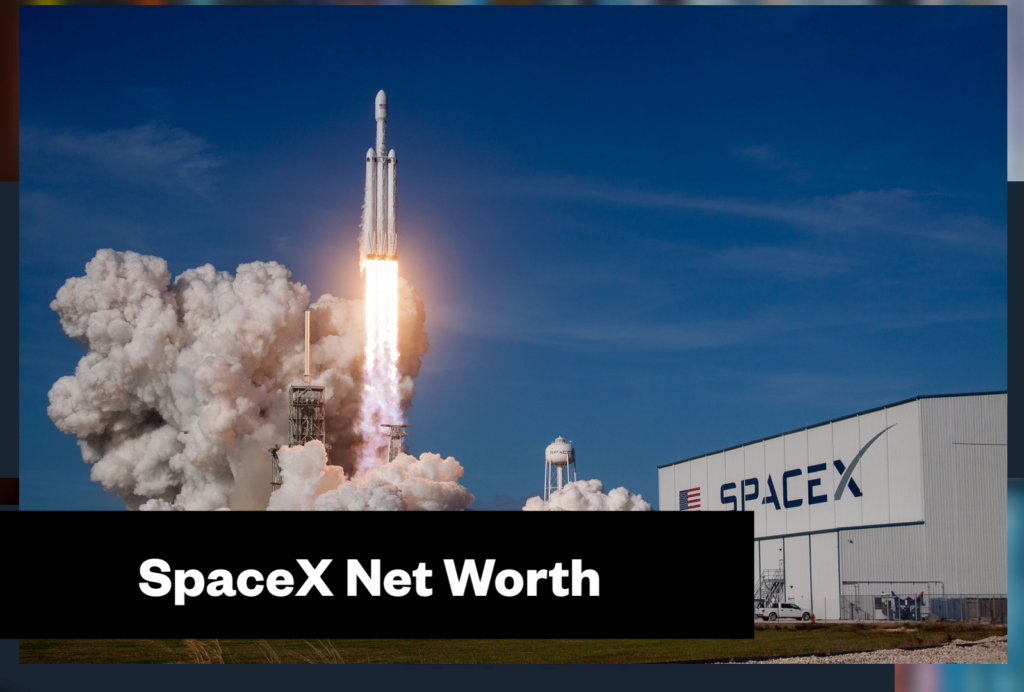
SpaceX’s latest valuation, revenue, IPO market cap, Starlink income, launch business, assets, investors and business model explained.
Key Highlights
- SpaceX is now valued at about $2.1 trillion after its historic stock market debut.
- The company’s value is better described as market capitalisation or valuation, not traditional net worth.
- SpaceX generated about $18.7 billion in revenue in 2025, based on recent public reports.
- Starlink, rocket launches, government contracts and satellite services are major parts of its business model.
- SpaceX remains heavily growth-focused, meaning high revenue does not automatically mean high profit.
- Elon Musk’s personal wealth is strongly linked to his SpaceX ownership stake.
- The company’s future value depends on Starlink growth, launch demand, defence contracts, Starship progress, AI infrastructure plans and investor confidence.
Introduction
SpaceX is one of the most valuable technology and aerospace companies in the world. Founded by Elon Musk in 2002, the company has grown from an ambitious rocket startup into a global leader in reusable rockets, satellite internet, commercial launches, defence-related space services and future space infrastructure.
Interest in SpaceX’s net worth has increased sharply because of its historic public market debut. The company is no longer discussed only as a private aerospace firm with estimated valuation figures. It is now being valued by public market investors, making its financial profile more visible than ever.
For a company like SpaceX, the term “net worth” is not always the best financial phrase. People use it in search because they want to know how valuable the company is. In business terms, the better words are valuation, market capitalisation, revenue, assets and enterprise value.
SpaceX’s latest valuation is important because it shows how investors view the company’s future. Its value is not based only on current rocket launches. It is also based on Starlink’s satellite internet business, government contracts, reusable launch technology, Starship ambitions and long-term expectations around space-based infrastructure.
Quick Company Profile
| Detail | Information |
|---|---|
| Company Name | Space Exploration Technologies Corp. |
| Common Name | SpaceX |
| Founder | Elon Musk |
| Founded | 2002 |
| Industry | Aerospace, satellite internet, defence technology and space infrastructure |
| Headquarters | Hawthorne, California, United States |
| Main Businesses | Rocket launches, Starlink, satellites, spacecraft and space services |
| Latest Valuation | About $2.1 trillion |
| 2025 Revenue | About $18.7 billion |
| Major Products | Falcon 9, Falcon Heavy, Dragon, Starship and Starlink |
| Main Wealth Driver | Starlink growth and reusable rocket technology |
| Public Market Status | Publicly traded after IPO |
SpaceX Net Worth: What Is the Company Worth?
SpaceX’s current value is estimated at about $2.1 trillion after its public market debut. This makes it one of the most valuable companies in the world and one of the biggest wealth stories in modern technology.
However, it is important to understand what this figure means. A company’s value is not the same as cash in the bank. The $2.1 trillion figure represents what investors are willing to pay for the company based on its shares, growth potential, assets, technology, revenue and future expectations.
This is why SpaceX’s “net worth” should be understood as company valuation or market capitalisation. Market capitalisation is calculated by multiplying the company’s share price by the total number of shares. It can rise or fall daily as investors buy and sell the stock.
SpaceX’s valuation is high because investors see the company as more than a rocket business. It is also a satellite internet company, a defence technology provider, a possible space infrastructure leader and a long-term bet on commercial space expansion.
Why SpaceX’s Value Increased So Much
SpaceX’s value increased sharply because its public market debut gave investors a direct way to buy into the company’s future. Before going public, SpaceX’s valuation came from private funding rounds, tender offers and investor estimates. After its IPO, the market had a clearer way to price the company.
Several factors helped drive the high valuation.
First, SpaceX dominates the reusable rocket launch market. Its Falcon 9 rocket has changed the economics of space launches by making rocket reuse commercially practical.
Second, Starlink has become a major business. Satellite internet gives SpaceX a recurring revenue stream that is different from one-off launch contracts.
Third, SpaceX has strong government and defence demand. Agencies and governments need reliable launch services, satellite systems and space infrastructure.
Fourth, investors are excited about Starship. If Starship becomes fully operational at scale, it could reduce launch costs and open new commercial possibilities.
Fifth, SpaceX is connected to future technology themes such as global internet access, AI infrastructure, space logistics and Mars exploration.
This combination makes SpaceX attractive to investors who are looking for long-term growth rather than only current profits.
SpaceX Revenue and Financial Performance
SpaceX reportedly generated about $18.7 billion in revenue in 2025. This is a major figure for an aerospace company, especially one that began as a private rocket startup.
Revenue is the total money the company brings in before expenses. For SpaceX, revenue can come from launch services, Starlink subscriptions, satellite-related services, government contracts, commercial customers and other space technology operations.
But revenue alone does not tell the whole story. SpaceX also spends heavily on rocket development, Starship testing, satellite deployment, infrastructure, staff, research, manufacturing and future projects. Reports show that the company has carried significant losses despite strong revenue growth.
This is not unusual for high-growth technology companies. Many fast-growing companies spend aggressively to build infrastructure, expand market share and develop future products. Investors may accept short-term losses if they believe the company can become much more profitable later.
For SpaceX, the key question is whether Starlink, reusable launches and future services can generate enough long-term profit to justify the company’s huge valuation.
How SpaceX Makes Money
SpaceX has several major income sources. This is one reason investors value the company so highly. It is not dependent on one product alone.
Starlink Subscription Revenue
Starlink is one of SpaceX’s most important businesses. It provides satellite internet services to homes, businesses, remote areas, ships, aircraft and other users.
Unlike rocket launches, which are project-based, Starlink can generate recurring monthly subscription revenue. This makes it extremely valuable from a business perspective.
A recurring revenue model is attractive because customers pay continuously. If Starlink keeps growing its subscriber base, it could become one of SpaceX’s most important long-term cash generators.
Rocket Launch Services
SpaceX makes money by launching satellites, cargo and spacecraft for commercial customers, governments and agencies. The company’s Falcon 9 rocket is one of the most used launch vehicles in the world.
Reusable rockets give SpaceX a major cost advantage. By landing and reusing boosters, the company can reduce the cost of access to space and offer competitive pricing.
Launch customers may include satellite companies, defence agencies, research organisations and international partners.
NASA and Government Contracts
Government contracts are another major revenue source. SpaceX has worked with NASA on cargo missions, crewed spaceflight and other space programmes.
The company also has defence and national security-related business. These contracts can be valuable because governments often need reliable long-term partners for sensitive and expensive space missions.
Starship and Future Space Services
Starship is not only a rocket project. It is part of SpaceX’s long-term plan to lower the cost of heavy-lift space transportation.
If Starship becomes commercially successful, it could support satellite deployment, lunar missions, Mars-related projects, large-scale cargo movement and new space infrastructure businesses.
This future potential is one reason investors may value SpaceX far above its current revenue.
Satellite and Space Infrastructure
SpaceX also benefits from owning and operating parts of the space infrastructure stack. It builds rockets, launches satellites, operates Starlink and controls many parts of its supply chain.
This vertical integration can create financial strength because the company does not rely entirely on outside providers.
Starlink’s Role in SpaceX’s Valuation
Starlink is now one of the biggest reasons SpaceX is valued so highly. While rockets made SpaceX famous, Starlink gives the company a scalable internet business.
The satellite internet market is large because many parts of the world still lack reliable broadband access. Starlink can serve rural areas, ships, aircraft, emergency zones, military users and remote businesses.
Starlink also gives SpaceX a way to turn rocket launches into a direct business advantage. Because SpaceX launches its own satellites, it can expand its network faster and more efficiently than competitors that must pay other launch providers.
This is a powerful business loop:
SpaceX builds rockets.
SpaceX launches Starlink satellites.
Starlink gains more coverage.
More coverage attracts more customers.
More customers increase revenue.
More revenue supports more launches and satellites.
This is one reason Starlink is central to SpaceX’s financial story.
SpaceX Assets and Business Strength
SpaceX’s value is supported by several important assets. These assets are not only physical. Some are technological, strategic and commercial.
The company’s major assets include:
- Reusable rocket technology
- Falcon 9 and Falcon Heavy launch systems
- Starship development programme
- Dragon spacecraft
- Starlink satellite network
- Launch facilities
- Manufacturing systems
- Government contracts
- Engineering talent
- Brand strength
- Intellectual property
- Customer relationships
- Global satellite internet infrastructure
These assets help explain why SpaceX is valued far above ordinary aerospace companies. Investors are not just buying into today’s revenue. They are buying into technology, infrastructure and future market control.
SpaceX Valuation vs Revenue
One of the most important things to understand is the difference between SpaceX’s valuation and its revenue.
SpaceX’s valuation is about $2.1 trillion. Its reported 2025 revenue was about $18.7 billion. That means the market is valuing SpaceX at a very high multiple of revenue.
A high valuation-to-revenue ratio usually means investors expect very fast growth in the future. They may believe SpaceX can grow Starlink, dominate launch services, expand defence contracts and build new space infrastructure markets.
But high valuations also carry risk. If SpaceX does not grow as expected, or if Starlink margins weaken, investors may reduce how much they are willing to pay for the company’s shares.
This is why SpaceX’s market value could move sharply over time. The company has huge potential, but investors are pricing in a lot of future success.
SpaceX Compared With Other Major Companies
SpaceX’s valuation puts it among the world’s most valuable companies. That is remarkable because many of the largest companies in the world are software, consumer technology, artificial intelligence, ecommerce or semiconductor businesses.
SpaceX is different because it operates in aerospace, infrastructure and satellite internet. It has heavy manufacturing costs, engineering risks and large capital requirements. Yet investors still value it like a top technology company because of its growth potential.
Compared with traditional aerospace companies, SpaceX has a much more aggressive technology profile. It is not only building rockets for clients. It is building a full commercial space ecosystem.
Compared with internet companies, SpaceX has a more difficult physical infrastructure challenge. It must build, launch and maintain satellites and rockets. But if it succeeds, that infrastructure could become extremely valuable.
Elon Musk’s Role in SpaceX’s Value
Elon Musk remains central to SpaceX’s valuation. His role as founder and leader gives investors confidence because of his history with Tesla, PayPal, SpaceX and other technology ventures.
Musk’s public image can help attract attention, investor demand and media coverage. However, it can also create volatility because investor sentiment may react to his public statements, business decisions or leadership style.
His personal wealth is strongly connected to SpaceX because he owns a major stake in the company. When SpaceX’s valuation rises, his net worth can increase. When SpaceX shares fall, his estimated wealth can decline.
This connection between founder wealth and company valuation is common in technology businesses, but SpaceX makes it especially visible because of the size of the company’s market value.
Risks That Could Affect SpaceX’s Value
SpaceX has major strengths, but its valuation also comes with risks.
High Investor Expectations
A $2 trillion valuation creates pressure. Investors will expect strong revenue growth, better profitability and successful execution.
Starship Development Risk
Starship could become a major breakthrough, but large rocket development is difficult, expensive and risky. Delays or failures could affect confidence.
Starlink Competition
Starlink is a leader in satellite internet, but competition from other satellite providers, telecom companies and governments could affect growth.
Regulatory Pressure
SpaceX operates in a highly regulated industry. Launch approvals, satellite rules, defence contracts and international regulations can affect operations.
Profitability Questions
High revenue does not guarantee high profit. SpaceX needs to show that its businesses can generate durable earnings over time.
Market Volatility
Because SpaceX is now publicly valued, its share price may move based on market sentiment, interest rates, technology trends and investor confidence.
Financial Lessons From SpaceX’s Growth
SpaceX’s growth offers several business lessons.
First, solving a hard problem can create enormous value. SpaceX reduced launch costs through reusable rockets, and that changed the space industry.
Second, vertical integration can be powerful. SpaceX builds rockets, launches satellites and operates Starlink, giving it more control over its business model.
Third, recurring revenue matters. Starlink’s subscription model gives SpaceX a different financial profile from companies that rely only on contract-based launch revenue.
Fourth, valuation is based on future expectations. SpaceX’s market value reflects what investors believe the company can become, not only what it earns today.
Finally, founder-led companies can attract strong investor interest, especially when the founder has a record of building valuable businesses.
Conclusion
SpaceX’s net worth is best understood as company valuation or market capitalisation. After its historic market debut, the company is valued at about $2.1 trillion, making it one of the most valuable businesses in the world.
Its value comes from a powerful mix of reusable rockets, Starlink satellite internet, launch services, government contracts, Starship development and long-term space infrastructure ambitions. While the company generated about $18.7 billion in revenue in 2025, its huge valuation shows that investors are pricing in major future growth.
SpaceX is no longer just a rocket company. It is a space technology, satellite internet and infrastructure business with the potential to shape several future markets. That is why its valuation has become one of the biggest financial stories in global business.
FAQs
What is SpaceX’s net worth?
SpaceX’s net worth is better described as company valuation or market capitalisation. Its latest valuation is about $2.1 trillion after its public market debut.
How does SpaceX make money?
SpaceX makes money from Starlink subscriptions, rocket launches, NASA contracts, government missions, commercial satellite launches and future space infrastructure services.
How much revenue does SpaceX make?
Recent reports placed SpaceX’s 2025 revenue at about $18.7 billion, although the company also had major expenses and losses linked to growth and investment.
Is Starlink part of SpaceX?
Yes. Starlink is SpaceX’s satellite internet business and one of the biggest drivers of the company’s valuation.
Why is SpaceX so valuable?
SpaceX is valuable because of its reusable rocket technology, Starlink’s recurring revenue, government contracts, launch dominance, Starship potential and investor expectations for future space infrastructure.