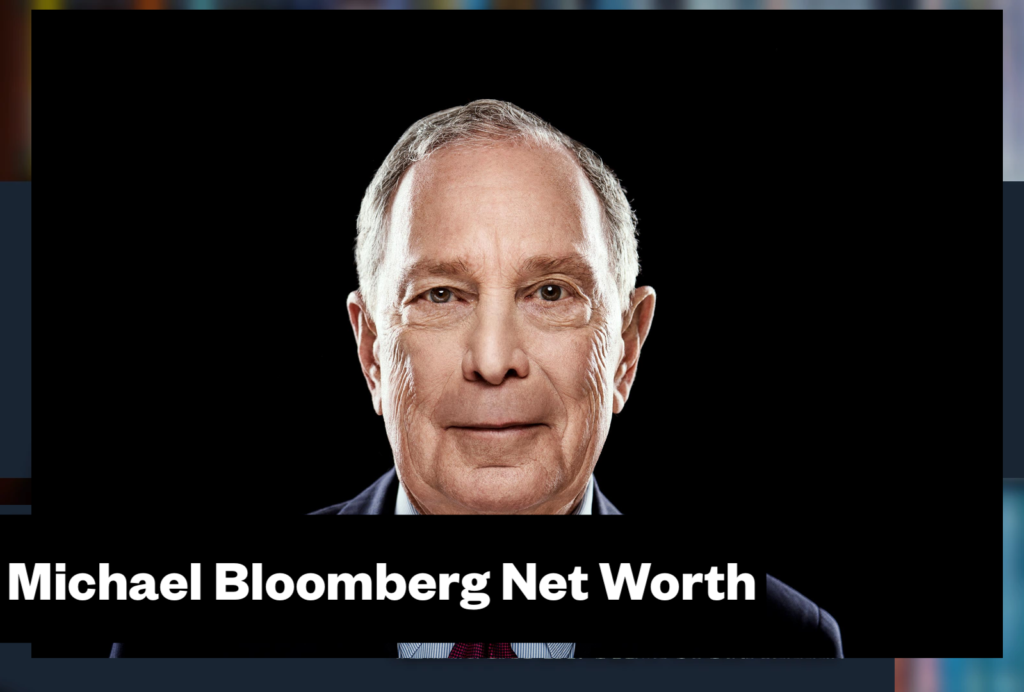
Michael Bloomberg’s net worth, Bloomberg LP ownership, business career, income sources, philanthropy, political spending and financial legacy explained.
Key Highlights
- Michael Bloomberg is an American billionaire entrepreneur, media owner, philanthropist and former mayor of New York City.
- His wealth mainly comes from Bloomberg LP, the financial technology, data and media company he founded.
- Forbes listed Michael Bloomberg among the world’s richest people in 2026.
- His estimated net worth is above $100 billion, based largely on the value of Bloomberg LP.
- He served three terms as Mayor of New York City from 2002 to 2013.
- Bloomberg has donated billions of dollars through Bloomberg Philanthropies.
- His financial story is a strong example of how data, media, technology and ownership can create long-term wealth.
Introduction
Michael Bloomberg is one of the richest business figures in the world, but his wealth story is not built around entertainment, sports, inheritance or social media fame. His fortune comes mainly from building Bloomberg LP, a financial data, technology and media company that became deeply important to Wall Street, banks, traders, investors, governments and business professionals.
His net worth attracts attention because it is tied to a private company with huge influence in global finance. Bloomberg LP is best known for the Bloomberg Terminal, a paid financial information system used by investment banks, asset managers, traders, analysts and other market professionals. The company also owns Bloomberg News, Bloomberg Television, Bloomberg Radio and other media products.
Unlike billionaires whose wealth rises and falls daily through publicly traded shares, Bloomberg’s fortune is harder to value precisely because Bloomberg LP is privately held. Still, major wealth trackers have consistently placed him among the world’s richest people.
Michael Bloomberg’s financial journey is also unusual because he moved across business, politics and philanthropy. He founded a global company, became Mayor of New York City, spent heavily from his own fortune on politics, and committed much of his wealth to charitable causes.
Quick Profile Table
| Detail | Information |
|---|---|
| Full Name | Michael Rubens Bloomberg |
| Profession | Entrepreneur, businessman, media owner, philanthropist and former politician |
| Date of Birth | 14 February 1942 |
| Birthplace | Medford, Massachusetts, United States |
| Nationality | American |
| Known For | Founder of Bloomberg LP and former Mayor of New York City |
| Main Company | Bloomberg LP |
| Major Wealth Source | Financial data, media, technology and company ownership |
| Estimated Net Worth | Above $100 billion, based on public billionaire estimates |
| Political Role | Mayor of New York City from 2002 to 2013 |
| Philanthropy | Bloomberg Philanthropies |
| Education | Johns Hopkins University and Harvard Business School |
Michael Bloomberg’s Estimated Net Worth
Michael Bloomberg’s estimated net worth is above $100 billion, according to major billionaire rankings. Forbes listed him among the richest people in the world in 2026, with his wealth largely connected to Bloomberg LP.
His net worth should be understood through company ownership. Bloomberg LP is a private company, so its valuation is not displayed publicly every trading day like Apple, Microsoft or Tesla. Instead, wealth estimates are based on the company’s revenue, profitability, market position, private valuation assumptions and Bloomberg’s ownership interest.
This makes Bloomberg’s net worth different from that of many stock-market billionaires. A public company founder’s wealth can be calculated more directly by multiplying their shares by the current share price. Bloomberg’s wealth requires more estimation because Bloomberg LP is not publicly traded.
Even with that limitation, his financial position is one of the strongest in the world. His fortune is supported by a business that serves high-paying professional customers, especially in finance. Bloomberg LP’s products are not ordinary consumer apps. They are premium business tools used by people and institutions that rely on real-time financial data.
That is why Bloomberg’s wealth has remained so large. It is connected to a company with deep market relevance, strong customer loyalty and a powerful brand in global finance.
Why Bloomberg LP Is the Centre of His Fortune
Bloomberg LP is the foundation of Michael Bloomberg’s wealth. The company began after Bloomberg left Salomon Brothers in 1981. Instead of simply looking for another Wall Street job, he used his finance and technology experience to build a company that would organise and deliver financial information faster and more clearly.
The company’s most famous product is the Bloomberg Terminal. The terminal gives finance professionals access to market data, news, analytics, trading tools, charts and communication features. For banks, hedge funds, asset managers and investment firms, access to fast and reliable financial information can be extremely valuable.
This is the business idea that made Bloomberg rich: financial professionals will pay premium prices for trusted data if that data helps them make better decisions.
Bloomberg LP later expanded beyond terminals into news, television, radio, magazines, digital media and business intelligence. However, the terminal and financial data business remain the core of the company’s value.
A major reason Bloomberg became so wealthy is that he did not just create a useful product. He retained major ownership of the company. Ownership is one of the biggest wealth builders in business. Salary can create income, but equity can create enormous long-term wealth when a company grows.
How Michael Bloomberg Makes Money
Michael Bloomberg’s income and wealth come from several connected sources, but Bloomberg LP remains the most important.
Bloomberg LP Ownership
The biggest source of Bloomberg’s wealth is his ownership of Bloomberg LP. As the company grew into a global financial data and media powerhouse, his ownership stake became extremely valuable.
Private company ownership can create wealth through dividends, retained earnings, buybacks, business valuation growth and future sale potential. Bloomberg has not needed to sell the company to become wealthy because the business itself has produced enormous value over time.
Financial Data and Terminal Revenue
Bloomberg LP earns a large part of its money from selling access to financial data tools. The Bloomberg Terminal is expensive compared with ordinary software, but its customers are usually institutions and professionals who need fast, accurate and detailed market information.
This makes the business model powerful. Customers who depend on the service may keep paying for many years, creating recurring revenue.
Media and Business Information
Bloomberg LP also earns from media and information services. Bloomberg News, Bloomberg Television, Bloomberg Radio and digital business platforms support the company’s global brand.
While the media side may not be the biggest driver of wealth compared with financial data, it strengthens the company’s influence and public visibility.
Books, Speaking and Public Influence
Michael Bloomberg has also written books and built a major public profile. These are not the main sources of his fortune, but they support his authority as a business leader, former mayor and philanthropist.
His public influence also gives him access to major policy, business and philanthropic networks.
Investments and Wealth Management
A billionaire of Bloomberg’s level may also have private investments, cash reserves, real estate and other assets. However, the central driver of his wealth remains Bloomberg LP, not ordinary investment income.
Early Life and Career Before Bloomberg LP
Michael Bloomberg was born in Medford, Massachusetts. He studied engineering at Johns Hopkins University before earning an MBA from Harvard Business School.
After completing his education, he joined Salomon Brothers, a major Wall Street investment bank. He started in an entry-level role and rose through the company over many years. His experience at Salomon Brothers gave him a close understanding of financial markets, trading, data needs and the technology gaps that existed in the industry.
When Salomon Brothers was acquired in 1981, Bloomberg lost his job. That moment became the turning point of his financial life. Instead of seeing the setback as the end of his career, he used it as the beginning of a new company.
This part of his story is important because it shows how specialised knowledge can become a business advantage. Bloomberg understood Wall Street’s problems because he had worked inside the system. He saw that traders and investors needed faster, clearer and more useful financial information. That insight became the foundation of Bloomberg LP.
Bloomberg LP Growth and Business Model
Bloomberg LP grew because it solved a serious problem for a valuable customer base. Financial markets move quickly, and professionals need accurate information in real time. If a tool helps them work faster, analyse risk, track prices and communicate effectively, they are willing to pay for it.
The Bloomberg Terminal became more than software. It became part of the daily workflow of many finance professionals. That kind of product loyalty is extremely valuable. Once a company becomes embedded in a customer’s work process, switching to another provider can be difficult.
The business model has several strengths:
- Recurring subscription income
- High-value professional customers
- Strong brand trust
- Deep market data integration
- Global reach
- Media influence
- Long-term customer relationships
These strengths help explain why Bloomberg’s wealth has remained so large. His company does not depend on one viral trend or one short-lived product cycle. It serves a long-term need in global finance.
Political Career and Public Service
Michael Bloomberg also became a major political figure. He was elected Mayor of New York City in 2001 and served three terms from 2002 to 2013.
His mayoral career became part of his public identity. He was known for a data-driven and managerial style of government. His administration focused on public health, economic development, education, climate policy, crime, transportation and city management.
His time as mayor did not make him a billionaire. He was already extremely wealthy before entering office. However, politics expanded his influence and made him one of the most recognisable business figures in public life.
Bloomberg also funded much of his political career with his own money. His self-funded campaigns showed the scale of his personal wealth and his willingness to spend heavily on public life.
Political Spending and Presidential Campaign
Michael Bloomberg’s political spending is one of the most unusual parts of his financial profile. He spent large sums of his own money on mayoral campaigns, policy causes and his 2020 presidential campaign.
His 2020 presidential campaign was especially expensive. Although the campaign did not succeed, it showed how his wealth allowed him to compete nationally without relying heavily on traditional fundraising.
This kind of political spending reduces personal wealth in one sense because the money is spent rather than invested. But it also reflects the scale of his fortune. Very few individuals can spend hundreds of millions of dollars on politics and still remain among the richest people in the world.
Philanthropy and Giving
Philanthropy is central to Michael Bloomberg’s financial legacy. Through Bloomberg Philanthropies, he has donated billions of dollars to public health, education, climate action, the arts, government innovation and other causes.
His official biography states that he has given away $25.4 billion so far, including $4.3 billion in 2025 alone. This makes him one of the most active philanthropists in the world.
Bloomberg has also pledged to give away nearly all of his money during his lifetime. That matters when discussing his net worth because philanthropy can reduce personal wealth over time while increasing social impact.
His giving is not separate from his public identity. It has become one of the main ways people understand his legacy. While Bloomberg LP created his fortune, Bloomberg Philanthropies shapes how much of that fortune is used.
Assets, Company Ownership and Wealth Structure
Michael Bloomberg’s most important asset is his ownership interest in Bloomberg LP. That ownership is more valuable than any ordinary luxury asset.
Public discussions of billionaire wealth often focus on homes, cars or private jets, but for Bloomberg, the real financial power is business ownership. A company that generates major revenue, serves global institutions and has a strong market position can be worth far more than visible personal possessions.
His wealth structure likely includes:
- Bloomberg LP ownership
- Cash and investment assets
- Real estate holdings
- Philanthropic commitments
- Political and charitable spending
- Business-related intellectual property and brand value
However, the exact details of his private investments and personal holdings are not fully disclosed. The reliable centre of his wealth story remains Bloomberg LP.
Net Worth vs Bloomberg LP Valuation
Michael Bloomberg’s net worth is closely tied to Bloomberg LP, but his net worth is not exactly the same as the company’s total value.
If a company is worth a certain amount, the founder’s personal net worth depends on ownership percentage, liabilities, taxes, liquidity and other assets. Bloomberg’s fortune is large because he is strongly linked to the company’s ownership, but exact private valuation methods can differ.
This is why different billionaire lists may show slightly different numbers. One estimate may value Bloomberg LP more aggressively, while another may use a more conservative method. Changes in company revenue, profitability, market conditions and comparable company valuations can also affect the estimate.
For readers, the important point is simple: Michael Bloomberg’s wealth is not based on a salary. It is based on owning a highly valuable private company.
Michael Bloomberg Compared With Other Billionaires
Michael Bloomberg’s wealth is different from that of many technology billionaires.
Elon Musk’s wealth is tied heavily to public companies such as Tesla and SpaceX valuations. Jeff Bezos built wealth through Amazon. Bill Gates built his fortune through Microsoft. Warren Buffett built wealth through Berkshire Hathaway and long-term investing.
Bloomberg’s fortune is more specialised. It comes from financial information, data terminals and business media. His company serves professionals rather than ordinary consumers. That makes him different from founders of social media platforms, ecommerce companies or consumer technology brands.
His wealth is also unusual because he combined business success with elected office and large-scale philanthropy. Few billionaires have had such a direct role in governing a major global city.
Why Michael Bloomberg’s Wealth Has Lasted
Michael Bloomberg’s wealth has lasted because Bloomberg LP is built on a durable business need. Financial markets always need data, speed, news, analysis and communication tools. As long as banks, traders, investors and governments need market intelligence, Bloomberg LP remains relevant.
Another reason is brand trust. In finance, trust is extremely valuable. Customers do not only want information. They want information they believe is accurate, fast and professional.
The third reason is ownership. Bloomberg did not simply create a company and leave early. He remained closely tied to the business and returned to it after leaving office. Long-term ownership allowed him to benefit from decades of company growth.
Financial Lessons From Michael Bloomberg’s Career
Michael Bloomberg’s career offers several useful financial lessons.
First, specialised knowledge can create wealth. Bloomberg understood financial markets deeply before creating Bloomberg LP.
Second, ownership is more powerful than salary. His fortune came from owning a company, not from being paid as an employee.
Third, business tools for professionals can be extremely profitable. Bloomberg LP succeeded by serving customers who needed high-value information and could afford premium prices.
Fourth, setbacks can become opportunities. Losing his job after Salomon Brothers was acquired pushed him into entrepreneurship.
Fifth, philanthropy can become part of a financial legacy. Bloomberg’s wealth story is not only about accumulation. It is also about how much of that wealth he has committed to public causes.
Conclusion
Michael Bloomberg’s estimated net worth is above $100 billion, making him one of the richest people in the world. His fortune comes mainly from Bloomberg LP, the financial data, technology and media company he founded after leaving Salomon Brothers.
His financial success is built on a clear business insight: finance professionals need fast, reliable and detailed information, and they are willing to pay for it. Bloomberg LP turned that insight into a global company with a powerful recurring-revenue model and deep influence across financial markets.
Bloomberg’s story is also more than business wealth. He became Mayor of New York City, spent heavily on politics, and donated billions through Bloomberg Philanthropies. His legacy combines entrepreneurship, public service and large-scale giving.
For readers studying billionaire wealth, Michael Bloomberg is one of the strongest examples of how company ownership, financial technology, data services and long-term business control can create extraordinary financial success.
FAQs
What is Michael Bloomberg’s net worth?
Michael Bloomberg’s net worth is estimated at above $100 billion, based mainly on the value of Bloomberg LP and his ownership in the company.
How did Michael Bloomberg make his money?
He made most of his money by founding Bloomberg LP, a financial technology, data and media company best known for the Bloomberg Terminal.
What is Bloomberg LP?
Bloomberg LP is a global financial data, software and media company. It provides market information, analytics, news and technology tools for finance professionals.
Was Michael Bloomberg Mayor of New York City?
Yes. Michael Bloomberg served as Mayor of New York City for three terms, from 2002 to 2013.
How much has Michael Bloomberg donated to charity?
His official biography says he has given away $25.4 billion so far through Bloomberg Philanthropies and related charitable giving.