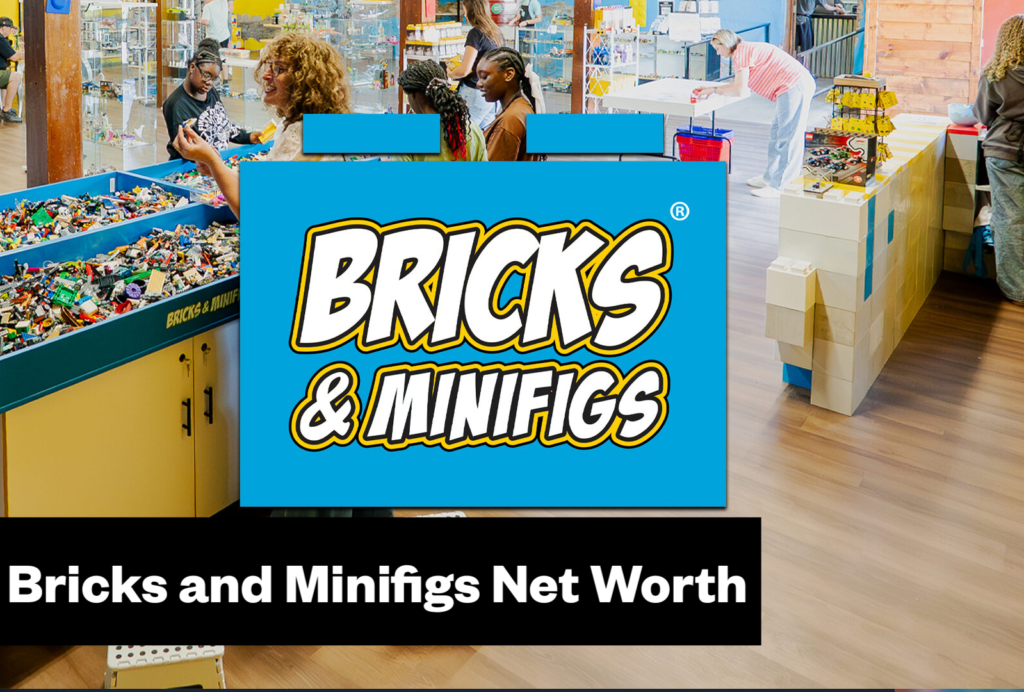
Bricks & Minifigs’ estimated brand value, franchise cost, revenue, business model, income sources, store growth and resale success explained.
Key Highlights
- Bricks & Minifigs is a retail franchise focused on buying, selling and trading LEGO products.
- The company’s exact net worth or private valuation is not publicly confirmed.
- Public company updates reported that overall brand revenue exceeded $95 million in 2026.
- The franchise has grown to more than 300 stores across the United States and Canada.
- Its business model is built around resale, new sets, used sets, loose bricks, minifigures, events and community retail.
- Its official franchise page lists an estimated initial investment range of $241,000 to $570,000.
- The brand’s financial value depends on franchise growth, store sales, royalty income, inventory turnover and collector demand.
Introduction
Bricks & Minifigs is a fast-growing retail franchise built around one of the world’s most recognisable toy categories: LEGO bricks, sets and minifigures. The company operates as a buy, sell and trade store where customers can purchase new and used LEGO products, sell collections, trade pieces and explore a community-focused retail experience.
Interest in Bricks & Minifigs’ net worth has increased because the brand has expanded quickly in the resale and collectibles market. Families, collectors, hobbyists and investors are all part of the growing demand for LEGO-related products. This demand has helped Bricks & Minifigs build a recognisable franchise model.
However, Bricks & Minifigs is not a public company, so its exact net worth, valuation, profits and ownership details are not fully available to the public. Unlike listed companies, private franchises do not publish complete financial statements for ordinary readers to analyse. This means any exact net worth figure should be treated carefully.
A better way to understand Bricks & Minifigs’ financial position is to look at its reported brand revenue, franchise cost, store count, business model, resale market position and the factors that may influence its valuation. This article explains the company’s financial profile in a clear and responsible way.
Quick Business Profile
| Detail | Information |
|---|---|
| Business Name | Bricks & Minifigs |
| Business Type | Retail franchise |
| Industry | Toy resale, collectibles, franchising and retail |
| Founded | 2009 |
| Franchising Since | 2011 |
| Known For | Buying, selling and trading LEGO products |
| Store Network | More than 300 stores reported in 2026 |
| Reported Brand Revenue | More than $95 million in 2026 |
| Estimated Company Net Worth | Not publicly confirmed |
| Franchise Investment Range | $241,000 to $570,000, based on official franchise information |
| Main Income Sources | Franchise fees, royalties, retail sales, resale inventory, events and brand partnerships |
| Main Customers | Families, collectors, hobbyists, LEGO fans and gift buyers |
Bricks & Minifigs Estimated Net Worth
Bricks & Minifigs’ exact net worth is not publicly confirmed. Because the company operates as a private franchise brand, there is no official stock market value that can be used to calculate a clear public valuation.
Still, the business appears to have significant brand value. Public company updates reported overall brand revenue above $95 million in 2026, with the franchise network surpassing 300 stores. Those figures suggest that Bricks & Minifigs has become a strong name in the LEGO resale and collectibles market.
It is important to understand the difference between revenue and net worth. Revenue is the total money generated by sales before expenses. Net worth or business value is different. It depends on assets, liabilities, profits, brand strength, intellectual property, franchise agreements, royalty income, inventory value, real estate obligations and long-term growth potential.
For a franchise company, value may come from several areas:
- Franchise fees paid by new store owners
- Ongoing royalty fees from franchisees
- Brand recognition
- Training systems and operating manuals
- Store network growth
- Supplier and retail relationships
- Customer loyalty
- Market demand for LEGO resale products
Because the company’s full financial statements are not public, the safest conclusion is that Bricks & Minifigs is a valuable and expanding franchise brand, but its exact net worth is not officially verified.
How Bricks & Minifigs Makes Money
Bricks & Minifigs has several income sources. Its business model is stronger than a simple toy shop because it combines retail sales, resale trading, franchise fees, local events and community experiences.
Retail Sales
The most visible income source is retail sales. Stores sell LEGO sets, minifigures, loose bricks, accessories and collectible items. Some products may be new, while others may be used or retired.
This is important because the LEGO resale market can be valuable. Retired sets, rare minifigures and limited items can attract collectors who are willing to pay more than normal retail prices.
Buying and Reselling Used LEGO Collections
A major part of the Bricks & Minifigs model is buying used LEGO collections from customers and reselling them. This gives stores access to inventory that may not be available through normal retail channels.
Customers may bring in loose bricks, complete sets, minifigures or large collections. Stores can then sort, clean, price and resell these items. This model can create good margins when inventory is purchased wisely and sold to the right buyers.
Franchise Fees
Bricks & Minifigs also makes money through franchising. New franchise owners pay an initial franchise fee to operate under the brand name and use the company’s business system.
The official franchise information lists a $40,000 franchise fee. This fee gives the franchisee access to the brand, training, systems and operating support.
Royalty and Advertising Fees
Franchise businesses often earn ongoing income through royalties. A royalty is usually a percentage of gross sales paid by each franchise owner to the franchisor. Advertising or marketing fees may also support brand growth and shared promotional efforts.
These recurring fees can be a powerful income source for a franchise company because they grow as the number of stores increases.
Birthday Parties, Events and Workshops
Many Bricks & Minifigs stores also offer events, parties, building activities and community experiences. These services can create extra income beyond product sales.
This is a smart part of the business model because it turns the store into more than a shopping location. It becomes a place for families, children, collectors and fans to gather.
Collector and Hobbyist Demand
Collectors can be valuable customers because they often look for specific minifigures, retired sets, rare parts and display pieces. Bricks & Minifigs benefits from serving both casual buyers and serious collectors.
This mix of customers helps the business avoid depending only on one type of buyer.
Bricks & Minifigs Franchise Cost
Bricks & Minifigs’ official franchise page lists an estimated initial investment range of $241,000 to $570,000. This figure can include several start-up costs such as the franchise fee, store build-out, point-of-sale system, fixtures, equipment, real estate improvements, inventory and working capital.
The official franchise financial page lists a franchise fee of $40,000. It also shows other estimated costs, including point-of-sale systems, fixtures, equipment, real estate improvements and starting inventory.
This means opening a Bricks & Minifigs store requires serious capital. It is not a low-cost side hustle. A franchisee needs enough money to lease or prepare a store, buy inventory, install systems, pay staff, market locally and handle early operating expenses.
The cost can vary based on location, store size, rent, construction needs, inventory level and local market conditions. A store in a high-rent area may cost more to open than one in a smaller market.
For readers comparing franchise opportunities, this investment range is important. It shows that Bricks & Minifigs sits in the retail franchise space, where inventory, physical location and customer experience are central to the business.
Business Growth and Store Expansion
Bricks & Minifigs has grown from a single-store concept into a large franchise network. The company began in 2009 and started franchising in 2011. By 2026, the brand reported that it had surpassed 300 stores.
This growth matters because franchise expansion is one of the clearest signs of business demand. When a franchise adds many new locations, it usually means entrepreneurs see potential in the model.
The company’s growth is also supported by the popularity of LEGO as a category. LEGO is not only a children’s toy. It is also a collector product, a family activity, a display item and a nostalgia-driven hobby for adults.
Bricks & Minifigs benefits from that broad audience. Parents buy for children, adults buy for themselves, collectors search for rare items, and gift buyers look for something fun and recognisable.
The resale angle also gives the company a different position from standard toy retailers. Instead of only selling current products, stores can carry used, retired and unusual inventory that may be harder to find elsewhere.
Why the Bricks & Minifigs Model Works
The Bricks & Minifigs model works because it combines three strong markets: toys, collectibles and resale.
Traditional toy shops often depend on new products from manufacturers. Bricks & Minifigs has a wider model because it can buy from customers and resell pre-owned items. This helps each store create a changing inventory that can feel unique.
The model also works because LEGO products have strong brand loyalty. Many customers do not see LEGO as a disposable toy. They see it as creative, educational, collectible and long-lasting.
Another strength is community. A physical retail store can offer experiences that online shops cannot fully replace. Children can build, collectors can browse, and families can attend events. This helps stores create emotional value, not just product value.
The company also benefits from nostalgia. Many adults who played with LEGO as children now buy sets for themselves or their families. This creates demand across age groups.
Assets, Brand Value and Business Strength
Bricks & Minifigs’ most important assets are not just physical products. Its brand value comes from its franchise system, store network, resale model, customer loyalty and community appeal.
The company’s business assets may include:
- Franchise agreements
- Brand name and trademarks
- Operating systems
- Training programmes
- Store design model
- Inventory systems
- Customer relationships
- Local franchise networks
- Event and party business model
- Experience in the LEGO resale market
Inventory is also a major asset at the store level. Used sets, retired products, rare minifigures and bulk bricks can carry meaningful resale value. However, inventory must be priced and managed carefully because values can change based on demand, condition and availability.
The brand’s value may continue to rise if it keeps opening stores, supporting franchisees and maintaining trust among collectors and families.
Revenue vs Profit vs Net Worth
When discussing Bricks & Minifigs’ net worth, it is important to separate revenue, profit and valuation.
Revenue is the total amount of money generated from sales. Public updates reported brand revenue above $95 million in 2026.
Profit is what remains after expenses such as rent, wages, inventory purchases, marketing, insurance, utilities, franchise fees and taxes.
Net worth or valuation is the estimated value of the business after considering assets, liabilities, earnings power, brand strength and future growth.
A company can have high revenue but lower profit if expenses are high. A franchise network can also have strong systemwide sales, while the franchisor’s direct income depends on fees, royalties and other agreements.
That is why it would be inaccurate to say Bricks & Minifigs is worth exactly the same amount as its reported revenue. Revenue gives readers useful context, but it is not the same as company net worth.
Bricks & Minifigs Compared With Traditional Toy Stores
Bricks & Minifigs is different from many traditional toy stores because it focuses heavily on LEGO resale and community experience. A normal toy shop may sell many brands, while Bricks & Minifigs has a narrower but more focused identity.
This focus can be an advantage. Customers know exactly what the store is about. Collectors can visit because they expect LEGO-related products, while families can visit because the store feels fun and interactive.
Compared with online marketplaces, Bricks & Minifigs offers trust and convenience. Customers can see products in person, trade items locally and avoid some of the uncertainty of buying used collectibles online.
Compared with large retailers, the company can carry unusual second-hand inventory. This makes stores attractive to people looking for discontinued sets, loose parts or rare minifigures.
The business is not without challenges. Physical stores have rent, staffing and inventory costs. They also depend on local demand and good franchisee management. But the combination of resale, collecting and community gives Bricks & Minifigs a clear position in the market.
Factors That May Affect Bricks & Minifigs’ Value
Several factors can affect the future value of Bricks & Minifigs.
Store Growth
More successful franchise locations can increase systemwide revenue and brand awareness. However, growth must be managed carefully to protect quality and franchisee performance.
Inventory Quality
Used LEGO inventory is central to the business. Stores need good sourcing, fair pricing and strong product organisation to keep customers returning.
Collector Demand
The value of rare minifigures, retired sets and collectible items can affect sales. Strong collector demand can support higher margins.
Franchisee Performance
A franchise brand depends on its operators. Well-run stores can strengthen the brand, while poorly managed locations can harm customer trust.
Competition
Bricks & Minifigs competes with online marketplaces, local toy stores, collectors, resale shops and large retailers. Its advantage is the specialised in-store experience.
Reputation and Trust
Trust is very important in a resale business. Customers need confidence when buying, selling or trading valuable collections. Public reputation can affect long-term brand value.
Economic Conditions
During difficult economic periods, some customers may spend less on collectibles. At the same time, resale stores may benefit when buyers look for more affordable used products.
Financial Lessons From Bricks & Minifigs
Bricks & Minifigs offers useful lessons for readers interested in business, franchising and retail wealth.
First, a focused niche can be powerful. The company does not try to sell every toy category. It focuses on LEGO products and builds a strong identity around that niche.
Second, resale can create value. Buying used items and reselling them to the right customers can be profitable when inventory is managed well.
Third, community matters in retail. Physical stores need more than shelves. Events, parties and local engagement can help create loyal customers.
Fourth, franchising can support fast growth. Instead of opening every store directly, the company allows franchisees to invest in local markets while using the brand system.
Finally, brand trust is a financial asset. In a business involving collectibles and resale, reputation can influence whether customers are comfortable buying, selling and trading.
Conclusion
Bricks & Minifigs’ exact net worth is not publicly confirmed, but the company has built a strong financial profile through franchise growth, LEGO resale, community retail and collectible demand. With more than 300 stores reported in 2026 and brand revenue exceeding $95 million, it has become a notable name in the toy resale and franchise market.
Its wealth is best understood through its business model rather than a single net worth figure. The company earns from franchise fees, royalties, retail sales, resale inventory, events and brand expansion. Its value depends on store performance, customer trust, franchisee success, inventory quality and long-term demand for LEGO products.
For readers studying business success, Bricks & Minifigs shows how a focused retail concept can grow into a large franchise network by combining nostalgia, collectibles, resale and community experience.
FAQs
What is Bricks & Minifigs’ net worth?
Bricks & Minifigs’ exact net worth is not publicly confirmed. It is a private franchise company, so there is no official public valuation.
How much revenue does Bricks & Minifigs make?
Public company updates reported that Bricks & Minifigs exceeded $95 million in overall brand revenue in 2026.
How much does it cost to open a Bricks & Minifigs franchise?
The official franchise page lists an estimated initial investment range of $241,000 to $570,000, depending on location, build-out, inventory and other costs.
How does Bricks & Minifigs make money?
The business makes money from retail sales, buying and reselling used LEGO products, franchise fees, royalties, events, parties and related store services.
Who founded Bricks & Minifigs?
Bricks & Minifigs was founded by LEGO enthusiasts David Ortiz and John Masek, according to the company’s own background information.