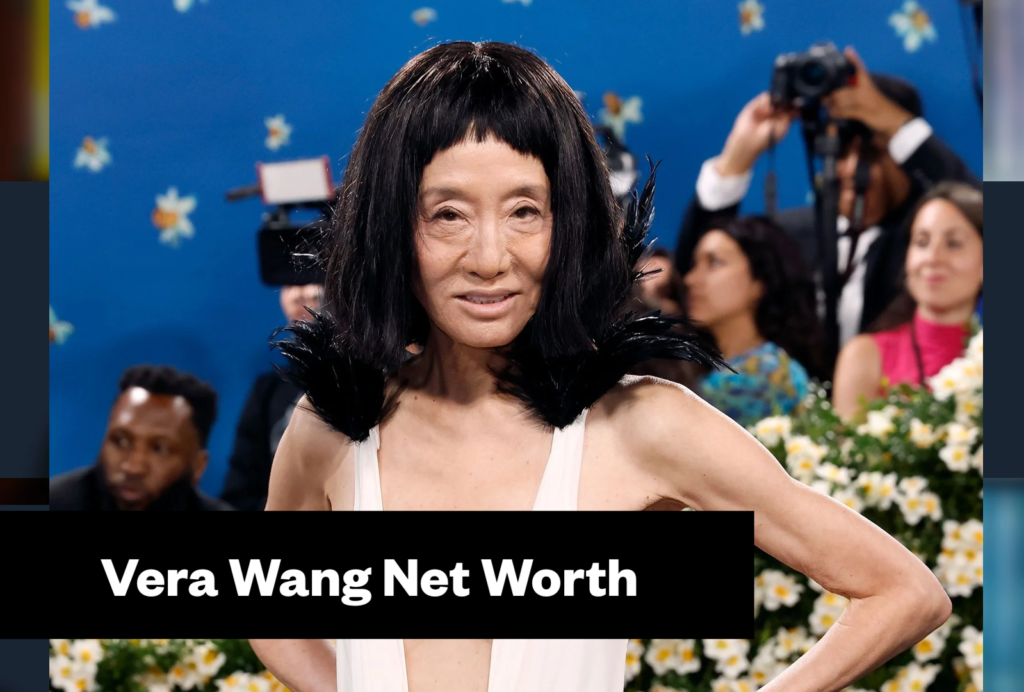
Vera Wang’s estimated net worth, bridal fashion empire, brand sale, income sources, retail sales, career journey and luxury lifestyle explained.
Key Highlights
- Vera Wang is one of the most influential bridal and fashion designers in the world.
- Her estimated net worth is commonly placed between $500 million and $650 million by major public wealth trackers.
- Forbes previously listed her at $500 million, while Celebrity Net Worth lists her at $650 million.
- Her wealth comes from bridal fashion, licensing deals, retail partnerships, fragrance, jewellery, home products and brand ownership.
- Her namesake brand was acquired by WHP Global in 2024, while Wang remained Founder and Chief Creative Officer.
- Reports said the Vera Wang brand generated more than $700 million in annual retail sales before the acquisition.
- Her financial success is strongly tied to bridalwear, luxury branding, licensing and long-term fashion influence.
Introduction
Vera Wang is one of the most successful fashion designers in modern bridalwear. Her name has become almost synonymous with luxury wedding dresses, celebrity bridal fashion and elegant design. Over several decades, she transformed a personal frustration over finding a wedding dress into a global fashion and lifestyle brand.
Interest in Vera Wang’s net worth is strong because her wealth story is not only about fashion fame. It is also about brand ownership, licensing, retail partnerships, luxury positioning and business expansion. She built a company that moved beyond wedding gowns into ready-to-wear, fragrance, jewellery, eyewear, home products and mass-market collaborations.
Unlike entertainers whose income depends mainly on film salaries or music royalties, Wang built wealth through a fashion brand. That makes her financial profile closer to an entrepreneur than a traditional celebrity. Her career shows how creative design, brand identity and smart retail expansion can create long-term business value.
Her estimated net worth varies by source, but the most commonly reported public range is between $500 million and $650 million. The stronger part of her wealth story is that her brand had major commercial value, generated large retail sales and attracted acquisition interest from a global brand management company.
Quick Profile Table
| Detail | Information |
|---|---|
| Full Name | Vera Ellen Wang |
| Profession | Fashion designer and entrepreneur |
| Nationality | American |
| Date of Birth | 27 June 1949 |
| Birthplace | New York City, United States |
| Known For | Luxury bridal gowns and fashion design |
| Estimated Net Worth | Around $500 million to $650 million, based on public estimates |
| Main Income Sources | Bridal fashion, licensing, retail sales, brand partnerships and fashion products |
| Brand Founded | Vera Wang |
| Major Business Event | WHP Global acquired the Vera Wang brand in 2024 |
| Public Role After Sale | Founder and Chief Creative Officer |
| Major Achievement | Built one of the world’s most recognised bridal fashion brands |
Vera Wang’s Estimated Net Worth
Vera Wang’s estimated net worth is commonly reported between $500 million and $650 million. Forbes previously listed her net worth at $500 million, while Celebrity Net Worth lists her at $650 million.
For a fashion entrepreneur, this wealth estimate is supported by real business signals. Wang built a globally recognised brand, expanded across multiple product categories, licensed her name to consumer products and eventually sold her brand to WHP Global.
The exact personal figure can differ because net worth trackers may use different methods. Some may value her personal assets, company sale proceeds, licensing income, brand value, investments and real estate differently. Taxes, expenses, business structures and private investments can also affect the final estimate.
However, Vera Wang is not a weak net worth topic. There are enough public financial signals to support a strong article: Forbes wealth estimates, Celebrity Net Worth estimates, reported retail sales, a major brand acquisition and decades of commercial fashion success.
Her net worth is best understood as the result of turning a design name into a luxury and lifestyle brand.
Why Vera Wang’s Wealth Is Stronger Than a Simple Fashion Salary
Vera Wang did not become wealthy only by designing individual dresses. Her financial success came from building a brand that could earn across many product categories.
A designer who only sells custom gowns has limited income potential because the business depends on time, production capacity and elite clients. Wang expanded beyond that model. She turned her name into a brand that could be attached to bridalwear, fragrance, accessories, home goods, jewellery and more accessible retail lines.
This is why her wealth profile is stronger than a typical fashion salary. She created brand equity. Brand equity means the commercial value attached to a recognised name. When consumers hear “Vera Wang”, they often think of elegance, weddings, luxury, celebrity brides and timeless style. That reputation has financial value.
Her ability to move from luxury bridal gowns to wider lifestyle categories allowed her company to reach more customers at different price points. That strategy helped grow the brand beyond a single boutique business.
How Vera Wang Makes Money
Vera Wang’s income sources are linked to fashion design, brand licensing, product partnerships and business ownership.
Bridal Fashion
Bridalwear is the foundation of Vera Wang’s business empire. Her wedding gowns became famous for combining traditional elegance with modern design. Celebrity brides and high-profile clients helped increase the brand’s visibility.
Luxury bridal gowns can be highly profitable because customers often attach emotional value to wedding fashion. A designer wedding dress is not only clothing. It is part of a major life event. Wang understood this market and built a brand around aspiration, romance and sophistication.
Brand Licensing
Licensing has been one of the most important parts of Vera Wang’s financial growth. Licensing allows a company to use a designer’s name on products in exchange for fees or royalties.
This can include products such as fragrance, jewellery, eyewear, home goods, bedding, dinnerware and accessories. Licensing helps a fashion brand expand without directly manufacturing every product itself.
For Wang, licensing made it possible to turn her name into a lifestyle brand. This helped her reach customers who may not buy a luxury wedding gown but may buy a fragrance, ring, home item or affordable fashion product linked to her name.
Retail Partnerships
Vera Wang also benefited from retail partnerships. Her Simply Vera line with Kohl’s helped bring her brand to a wider audience. This kind of partnership can create strong revenue because it connects a luxury designer name with mass-market retail distribution.
The strategy is financially smart because it allows a brand to serve both luxury and everyday customers. High-end bridal gowns protect the prestige of the name, while broader retail products create scale.
Brand Sale and Business Value
The 2024 acquisition of the Vera Wang brand by WHP Global was a major financial event. Reports said the brand generated more than $700 million in annual retail sales before the acquisition. That figure is important because it shows the brand had large commercial reach.
Wang remained Founder and Chief Creative Officer after the deal, which means her creative identity continued to be attached to the brand. This is common in fashion acquisitions because the founder’s image and design direction can remain valuable even after ownership changes.
Public Appearances and Fashion Influence
Vera Wang’s public image also supports her brand value. She continues to attract attention at fashion and cultural events. Recent coverage of her appearance at the 2026 Fragrance Foundation Awards shows that she remains visible and culturally relevant.
For fashion entrepreneurs, relevance matters. A designer who stays in the public conversation can maintain brand interest, attract media attention and support product demand.
Career Journey: From Vogue to Bridal Fashion Powerhouse
Vera Wang’s career began long before she became a bridalwear icon. She worked at Vogue for many years, gaining deep experience in fashion editing, styling, design trends and luxury presentation. This background gave her a strong understanding of how fashion is marketed, photographed and understood by consumers.
After Vogue, she worked at Ralph Lauren as a design director. This helped her gain more direct experience in fashion design and brand development.
Her move into bridalwear came later in life compared with many designers. When preparing for her own wedding, she struggled to find a dress that matched the modern, elegant style she wanted. That experience led her to design her own wedding dress and later launch her bridal business.
In 1990, Wang opened her first bridal boutique in New York. The timing was important. Bridal fashion was ready for a designer-led transformation. Many wedding dresses at the time were traditional, but Wang brought a fashion-editor’s eye to the category. She treated bridalwear with the same seriousness as runway fashion.
Her designs soon attracted high-profile clients and celebrity brides. This helped establish her as the designer of choice for women who wanted wedding gowns that felt luxurious, modern and memorable.
Over time, Wang expanded from bridalwear into a broader fashion and lifestyle empire. That expansion is what turned her from a designer into a major business figure.
Vera Wang Brand Value and Retail Sales
The Vera Wang brand became valuable because it combined luxury identity with broad commercial reach. The brand could sell expensive bridal gowns while also licensing products for wider retail markets.
Reports around the WHP Global acquisition said the brand generated more than $700 million in annual retail sales. Retail sales are not the same as profit, but they show the scale of consumer demand connected to the Vera Wang name.
This distinction is important. A brand can have large retail sales across licensed products, department stores and partners, while the designer’s personal income depends on ownership, royalties, sale terms and business agreements.
Still, high retail sales help explain why the brand was attractive to WHP Global. Brand management companies often look for names that can expand across categories, markets and licensing channels. Vera Wang fits that model because her name is recognised beyond fashion insiders.
Vera Wang Net Worth vs Brand Revenue
Vera Wang’s net worth is different from her brand’s retail sales. This is a key point for readers.
Retail sales refer to the total value of products sold under the Vera Wang brand through stores, partners and licensees. Net worth refers to the estimated value of Wang’s personal assets after considering business interests, sale proceeds, investments, taxes and liabilities.
A brand generating more than $700 million in annual retail sales does not mean Vera Wang personally earns $700 million per year. Retail sales are spread across manufacturers, retailers, distributors, licensees and business partners.
Her personal wealth is likely connected to:
- Past ownership of her brand
- Brand sale proceeds
- Licensing income
- Creative leadership role
- Fashion partnerships
- Investments
- Real estate and private assets
- Long-term business value
This is why her estimated net worth can be hundreds of millions while brand retail sales can be higher.
Assets, Business Interests and Investments
Vera Wang’s most important asset has always been her brand. Before the WHP Global acquisition, her ownership of the Vera Wang name and related fashion business was central to her financial profile.
Her business interests have included bridal gowns, ready-to-wear, fragrance, jewellery, home goods, accessories and retail collaborations. These are not random product categories. They all connect to lifestyle, elegance and special occasions.
Her brand’s ability to move into different categories increased its business value. A wedding dress brand may be limited, but a lifestyle brand can reach customers through many products.
There are public discussions about Vera Wang’s real estate and lifestyle, but the strongest financial evidence remains her business career, brand value and retail expansion. For an AdSense-safe article, it is better to focus on verified business strength rather than unsupported claims about private assets.
Lifestyle and Public Image
Vera Wang has a polished, stylish and highly recognisable public image. She is known for her slim silhouettes, dramatic outfits, modern elegance and confidence in personal style.
Recent media coverage of her appearance at the 2026 Fragrance Foundation Awards shows that she remains a fashion talking point even in her late seventies. Her public image supports her brand because she continues to represent fashion, confidence and visual identity.
Her lifestyle is best discussed through her professional image rather than private speculation. She is a fashion figure whose public appearances often reinforce her design identity. This has helped her stay relevant across generations.
Wang’s image also challenges the idea that fashion designers must fade from public attention after building their brands. She continues to appear at major events, maintain cultural visibility and influence conversations around style and ageing.
Vera Wang Compared With Other Fashion Designers
Vera Wang’s wealth places her among the most financially successful fashion designers in the world. Her career is different from designers who built global luxury groups, but it is also different from those who remained niche creative figures.
Her strength is bridalwear. Few designers are as strongly associated with wedding fashion as Vera Wang. That niche became her advantage. Instead of trying to compete with every luxury fashion house in every category, she dominated a highly emotional and profitable section of fashion.
Compared with designers whose wealth comes mainly from runway fashion, Wang’s fortune is tied more strongly to bridal retail, licensing and lifestyle expansion. Compared with celebrity designers, her credibility comes from decades of fashion experience, not only fame.
This makes her financial story especially useful. She built a luxury identity, expanded into mass-market opportunities and eventually created a brand valuable enough for acquisition.
Factors That May Affect Vera Wang’s Net Worth
Several factors can affect Vera Wang’s estimated net worth over time.
Brand Sale Terms
The WHP Global acquisition is a major factor. The exact terms, cash proceeds, retained interests and future compensation arrangements can affect her personal wealth.
Licensing Revenue
Licensing can continue to create income if Vera Wang products remain popular across jewellery, fragrance, home goods and other categories.
Brand Relevance
Fashion brands depend on relevance. Wang’s continued public visibility helps keep the brand culturally active.
Bridal Market Demand
The bridal fashion market can be affected by wedding trends, economic conditions, consumer spending and competition from new designers.
Retail Partnerships
Retail collaborations can increase brand reach. Strong partnerships can support sales, while weak retail performance can reduce growth.
Private Investments and Taxes
Like any wealthy entrepreneur, taxes, investments, estate planning, property and private financial decisions can affect her net worth.
Financial Lessons From Vera Wang’s Career
Vera Wang’s career offers several useful business lessons.
First, it is never too late to build a major company. Wang launched her bridal business after years of working in fashion media and design.
Second, niche positioning can be powerful. By focusing on bridalwear, she became the leading name in a category with strong emotional and financial value.
Third, brand licensing can create scale. A designer’s name can earn far beyond custom fashion if it is attached carefully to related products.
Fourth, luxury and mass-market can work together when managed properly. Vera Wang protected her high-end bridal image while reaching wider audiences through accessible retail partnerships.
Finally, ownership matters. Her wealth grew because she built a brand, not just because she worked in fashion.
Conclusion
Vera Wang’s estimated net worth is commonly placed between $500 million and $650 million, supported by decades of bridal fashion success, licensing income, retail partnerships and brand value. Her financial profile is strong because it is backed by real business signals, including a major brand acquisition and reported annual retail sales of more than $700 million.
Her journey from Vogue editor to bridal fashion entrepreneur shows how creativity can become a valuable business asset. She did not only design wedding dresses. She built a name that became powerful across luxury fashion, lifestyle products and consumer retail.
Vera Wang’s wealth story is a strong example of how a focused niche, strong branding, licensing strategy and long-term cultural relevance can create major financial success.
FAQs
What is Vera Wang’s net worth?
Vera Wang’s estimated net worth is commonly reported between $500 million and $650 million, depending on the source and valuation method.
How did Vera Wang make her money?
She made her money through bridal fashion, brand ownership, licensing deals, retail partnerships, fragrance, jewellery, home products and fashion-related products.
Did Vera Wang sell her brand?
Yes. WHP Global acquired the Vera Wang brand in 2024, while Wang remained Founder and Chief Creative Officer.
How much revenue does the Vera Wang brand generate?
Reports around the WHP Global acquisition said the brand generated more than $700 million in annual retail sales.
Why is Vera Wang famous?
Vera Wang is famous for transforming bridal fashion with elegant, modern wedding gowns and building one of the most recognisable fashion brands in the world.