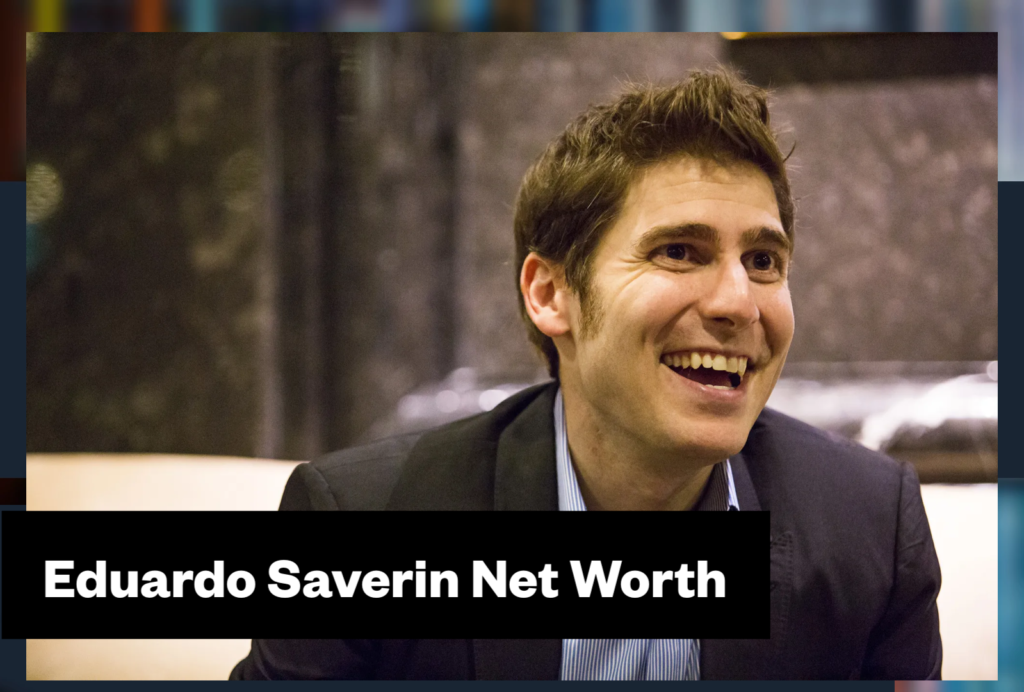
Eduardo Saverin’s net worth, Meta-linked fortune, Facebook co-founder story, B Capital investments, income sources and billionaire profile explained.
Key Highlights
- Eduardo Saverin is a Brazilian billionaire entrepreneur, investor and Facebook co-founder.
- Forbes listed his real-time net worth at about $32.5 billion as of 10 June 2026.
- His wealth is mainly linked to his early Facebook stake, now connected to Meta Platforms’ stock value.
- He is also Co-Founder and Co-CEO of B Capital, a global venture capital firm.
- B Capital has grown into a major investment platform with over $9 billion in assets under management.
- Saverin’s financial profile is strongest when viewed through Meta shares, venture capital, startup investing and long-term equity value.
Introduction
Eduardo Saverin is one of the richest technology entrepreneurs connected to the rise of Facebook, now Meta Platforms. He is best known as one of Facebook’s co-founders and early investors, but his financial story did not end with the social media company. After leaving the daily Facebook story behind, Saverin built a quieter but highly influential investment career from Singapore.
His net worth attracts attention because it is tied to one of the most valuable technology companies in the world. Unlike entertainers or athletes whose wealth often comes from salaries, contracts or endorsements, Saverin’s fortune is mainly built on equity. That means the value of his wealth can rise or fall depending on stock performance, especially Meta’s share price.
Eduardo Saverin is a strong net worth topic because there are public financial signals to discuss. Forbes tracks his billionaire status, his Facebook co-founder history is well documented, and his venture capital firm B Capital publicly describes its scale, global offices and assets under management.
His story is useful for readers who want to understand how early startup ownership, company shares, technology investing and venture capital can create major long-term wealth.
Quick Profile Table
| Detail | Information |
|---|---|
| Full Name | Eduardo Luiz Saverin |
| Profession | Entrepreneur, investor and venture capitalist |
| Nationality | Brazilian |
| Date of Birth | 19 March 1982 |
| Birthplace | São Paulo, Brazil |
| Known For | Co-founding Facebook and co-founding B Capital |
| Estimated Net Worth | About $32.5 billion as of 10 June 2026, based on Forbes real-time estimate |
| Main Wealth Source | Meta Platforms shares and technology investments |
| Main Business Role | Co-Founder and Co-CEO of B Capital |
| Education | Harvard University |
| Residence Base | Singapore |
| Industry | Technology, venture capital and startup investing |
Eduardo Saverin’s Estimated Net Worth
Eduardo Saverin’s estimated net worth is about $32.5 billion, based on Forbes’ real-time billionaire estimate as of 10 June 2026. His wealth has also been reported at higher levels during 2026, including $35.9 billion on Forbes’ 2026 billionaires list. This difference is normal for billionaires whose wealth depends heavily on public company stock prices.
Saverin’s fortune is mainly tied to Meta Platforms, the parent company of Facebook, Instagram, WhatsApp and other technology products. Because Meta is publicly traded, changes in its stock price can affect his estimated net worth quickly.
This is why his net worth should be understood as a moving estimate, not a fixed amount sitting in a bank account. A billionaire whose wealth is connected to shares may gain or lose billions on paper when the market changes.
Saverin’s financial profile is also supported by his work at B Capital. While his Meta-linked fortune remains the biggest part of his wealth story, B Capital gives him a continuing role in global technology investing. This means his current wealth is not only a story of early Facebook ownership, but also of venture capital, startup funding and long-term investment strategy.
Why Eduardo Saverin’s Wealth Is a Strong Net Worth Topic
Some public figures do not have enough reliable financial data for a full net worth profile. Eduardo Saverin is different.
His article has stronger value because his financial story can be explained through real wealth drivers:
| Wealth Driver | Why It Matters |
|---|---|
| Facebook co-founder status | He was one of the earliest people connected to Facebook’s ownership story |
| Meta share value | His wealth rises and falls with Meta’s stock performance |
| Forbes billionaire tracking | Public billionaire lists provide updated wealth estimates |
| B Capital | His investment firm shows his active role in venture capital |
| Startup investments | Venture investing can create additional long-term wealth |
| Singapore wealth ranking | He has been ranked among the richest people in Singapore |
This makes the topic more useful than a weak profile where the article would only repeat that financial details are unknown.
How Eduardo Saverin Made His Money
Eduardo Saverin made his money mainly through early involvement in Facebook and later through investment activity.
Facebook Co-Founder Wealth
Saverin’s biggest wealth source comes from Facebook. He was one of the company’s co-founders during its early Harvard years. Early ownership in a fast-growing technology company can become extremely valuable when the company scales globally and later becomes publicly traded.
Facebook became one of the most influential internet companies in history. Its growth into Meta Platforms created enormous value for early shareholders. Saverin’s wealth is therefore closely tied to the power of early startup equity.
This is one of the clearest lessons from his financial journey: owning a meaningful stake in a fast-growing company can become far more valuable than earning a high salary.
Meta Platforms Shares
Meta shares are central to Saverin’s billionaire status. As Meta’s market value rises or falls, his net worth estimate can also move. This explains why Forbes and other wealth trackers may show different numbers at different times.
For example, an estimate can be higher during a strong market period and lower when technology stocks decline. This does not necessarily mean Saverin bought or sold large assets. It may simply reflect changing market prices.
Venture Capital Through B Capital
Saverin is also Co-Founder and Co-CEO of B Capital. The firm invests in technology-driven companies and works with startups across different stages of growth.
B Capital gives Saverin a modern investment platform beyond Facebook. Through the firm, he is connected to sectors such as enterprise technology, healthcare, climate technology, financial technology and other innovation-led industries.
Venture capital can create wealth when investments in private companies grow in value, get acquired, or eventually go public. However, venture capital also carries risk because not all startups succeed.
Startup Investments
Before and through B Capital, Saverin became associated with startup investing, especially in Asia and global technology markets. This allowed him to use his Facebook experience, network and capital to support other entrepreneurs.
Startup investing can be powerful because early investments in successful companies may multiply in value. At the same time, it requires patience and risk management.
Investment Reputation
Reputation is also a financial asset in venture capital. Being a Facebook co-founder gives Saverin credibility with founders, investors and technology companies. His name can open doors that ordinary investors may not access easily.
This reputation does not appear directly on a balance sheet, but it can influence deal flow, partnerships and long-term investment opportunities.
Facebook, Meta and the Source of Saverin’s Fortune
Eduardo Saverin’s wealth story cannot be separated from Facebook. The company began as a college-based social networking platform and later grew into a global technology business.
The transformation from Facebook to Meta expanded the company’s business beyond one social network. Meta now includes major platforms and products such as Facebook, Instagram, WhatsApp, Messenger, advertising technology and artificial intelligence investments.
For Saverin, the most important financial point is that Meta became a public company with a massive market value. Early equity in such a company can create billionaire wealth even if the person is no longer involved in day-to-day operations.
This is different from salary-based wealth. A salary pays for labour. Equity pays for ownership. Saverin’s wealth shows why ownership in a successful technology company can become one of the strongest wealth-building tools in modern business.
B Capital and His Venture Capital Career
After Facebook, Eduardo Saverin became more active as a technology investor. His most important investment platform today is B Capital, which he co-founded with Raj Ganguly.
B Capital describes Saverin as Co-Founder and Co-CEO. The firm says it has grown into a global investment business with 9 locations, more than 100 employees and over $9 billion in assets under management.
This is important because it shows Saverin is not only known for a past Facebook role. He remains active in the technology and investment world.
B Capital focuses on helping companies grow across markets. Its investment interests include sectors where technology can improve large industries. These may include healthcare, enterprise software, financial technology, climate technology and digital transformation.
For Saverin’s financial profile, B Capital adds three important points:
- It keeps him active in global investing.
- It gives him access to private company growth opportunities.
- It strengthens his role as a long-term technology investor, not just a former Facebook co-founder.
Assets, Shares and Investment Value
Eduardo Saverin’s most important publicly discussed asset is his Meta-linked wealth. For billionaires connected to public companies, shares can be far more important than physical assets like houses, cars or luxury items.
His financial profile likely includes:
- Meta-related share value
- Venture capital interests through B Capital
- Private startup investments
- Possible fund-related income
- Long-term investment gains
- Personal assets and private holdings
The exact breakdown of his full asset portfolio is not completely public, but the strongest known wealth drivers are Meta shares and venture capital activity.
It is better to focus on these real financial signals than to speculate about private homes, cars or luxury purchases. For a billionaire investor, the biggest assets are usually equity, fund interests and long-term investments.
Lifestyle and Public Image
Eduardo Saverin has a more private public image than many technology billionaires. He is not as publicly visible as Mark Zuckerberg, Elon Musk or other high-profile tech figures. Much of his public identity is connected to Facebook’s early history, his move to Singapore and his investment career.
His lifestyle is often described as private and international. However, a responsible financial profile should not exaggerate personal luxury details unless they are clearly verified.
From a business perspective, Saverin’s image is that of a strategic investor. His career after Facebook suggests a preference for private investing, global markets and long-term technology bets.
His base in Singapore also places him near some of Asia’s fastest-growing technology and investment markets. This has likely supported his role as a global investor focused on cross-border business opportunities.
Net Worth vs Meta Stock Value
Eduardo Saverin’s net worth is closely connected to Meta stock value, but the two are not the same thing.
Meta stock value refers to the market price of shares in Meta Platforms. Saverin’s net worth estimate depends partly on how much Meta-linked equity he is believed to hold and what those shares are worth at a given time.
If Meta’s share price increases, his estimated wealth can rise. If Meta’s share price falls, his estimated wealth can decline. This can happen even if Saverin does nothing personally.
This is why billionaire net worth rankings often change. They are not always measuring cash. They are often measuring the current market value of assets.
For readers, this is an important lesson: billionaire wealth is often paper wealth tied to ownership, not simply money in a savings account.
Eduardo Saverin Compared With Other Facebook Co-Founders
Eduardo Saverin is often compared with other people connected to Facebook’s founding, especially Mark Zuckerberg and Dustin Moskovitz.
Mark Zuckerberg became the public face and long-term CEO of Facebook and Meta. His wealth is also tied heavily to Meta stock, but his role in the company remained much more visible.
Dustin Moskovitz also became a billionaire from Facebook and later co-founded Asana. His financial path shows another version of early Facebook wealth moving into a separate technology company.
Saverin’s path is different. He became less publicly involved with Facebook and later focused on investing, especially through B Capital. This makes his billionaire profile quieter, but still extremely significant.
Compared with many founders, Saverin’s story highlights the financial value of being early. Even without staying as the main public leader of Facebook, his early stake became a major source of long-term wealth.
Why Eduardo Saverin’s Net Worth Changes
Eduardo Saverin’s net worth can change for several reasons.
Meta Stock Movement
The biggest factor is Meta’s share price. Since his wealth is heavily connected to Meta, market movements can quickly affect his estimated fortune.
Technology Market Conditions
When investors are optimistic about technology, artificial intelligence, social media advertising and digital platforms, Meta’s valuation can improve. When the market is weaker, tech billionaires can lose wealth on paper.
Venture Capital Performance
B Capital’s investments may also affect Saverin’s long-term financial position. Successful portfolio companies can increase investment value, while failed startups can reduce returns.
Currency and Market Valuation
Wealth rankings are usually calculated in US dollars. Exchange rates, valuation methods and asset estimates can affect reported figures.
Share Sales or Transfers
If a billionaire sells shares, donates assets, moves holdings or changes investment structures, wealth estimates may shift. These details are not always immediately visible to the public.
Financial Lessons From Eduardo Saverin’s Wealth
Eduardo Saverin’s financial journey offers several useful lessons.
First, ownership can create more wealth than salary. Saverin’s fortune came from early equity in Facebook, not from a normal executive salary.
Second, timing matters. Being involved in a company at its earliest stage can create huge upside if the business becomes globally successful.
Third, wealth tied to shares can be volatile. A billionaire’s estimated net worth can rise or fall with the market, even when their daily life has not changed.
Fourth, reinvention matters. Saverin moved from being known mainly as a Facebook co-founder to becoming a venture capitalist through B Capital.
Fifth, global positioning can create opportunity. His Singapore base gives him access to Asian markets, international founders and cross-border investment opportunities.
For readers studying billionaire profiles, Saverin’s story is one of the clearest examples of how startup equity, technology investing and patient ownership can create lasting wealth.
Conclusion
Eduardo Saverin’s net worth is estimated at about $32.5 billion as of 10 June 2026, according to Forbes’ real-time billionaire data. His wealth is mainly connected to his early Facebook stake and the value of Meta Platforms shares. He has also built a major investment career through B Capital, which has grown into a global venture capital firm with billions of dollars in assets under management.
His financial story is not based on salary, endorsements or celebrity income. It is based on equity, ownership, technology growth and venture capital. Saverin’s journey shows how early participation in a world-changing startup can become a long-term billionaire fortune.
Today, Eduardo Saverin remains one of the most important wealth profiles in global technology. His name is tied to Facebook’s origins, Meta’s market value and the next generation of startup investing through B Capital.
FAQs
What is Eduardo Saverin’s net worth?
Eduardo Saverin’s net worth is estimated at about $32.5 billion as of 10 June 2026, based on Forbes’ real-time billionaire estimate.
How did Eduardo Saverin make his money?
He made most of his money from his early stake in Facebook, now Meta Platforms. He also invests in technology companies through B Capital.
Is Eduardo Saverin still connected to Facebook?
He is best known as a Facebook co-founder, but he is not the public leader of Meta. His wealth remains strongly linked to Meta share value.
What is B Capital?
B Capital is a global venture capital firm co-founded by Eduardo Saverin and Raj Ganguly. The firm invests in technology-driven companies across several sectors.
Why does Eduardo Saverin’s net worth change?
His net worth changes mainly because of Meta’s stock price, technology market conditions, investment performance and changes in asset values.