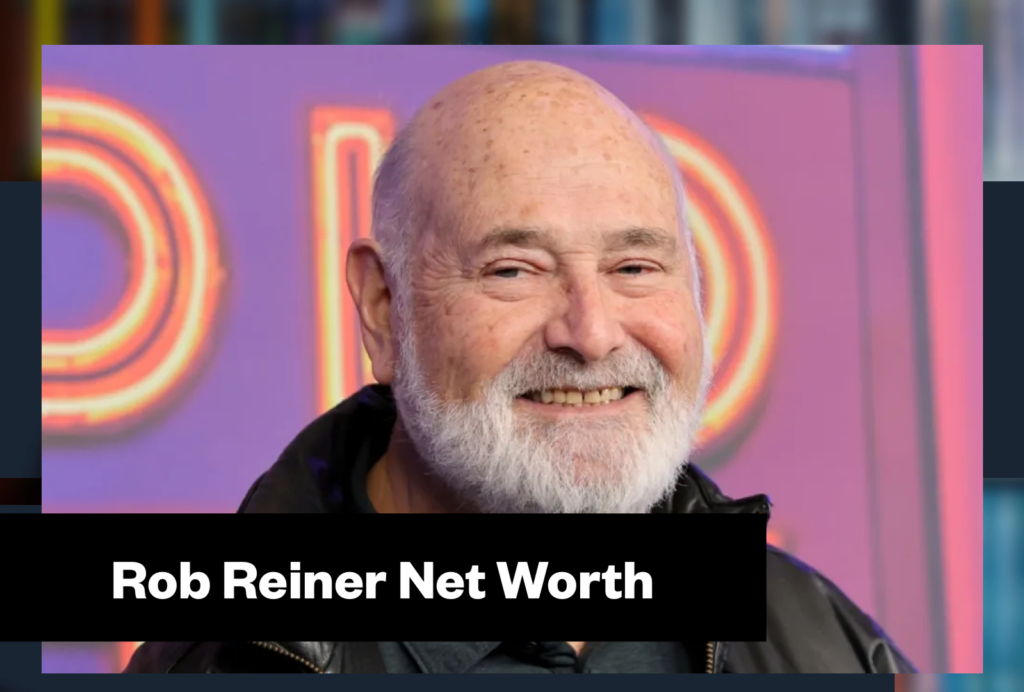
Rob Reiner’s net worth, film career, acting income, Castle Rock success, movie royalties, assets, achievements and Hollywood financial legacy explained.
Key Highlights
- Rob Reiner was an American actor, director, producer, writer and political activist.
- His estimated net worth was widely reported at around $200 million.
- He first became famous as Michael “Meathead” Stivic in All in the Family.
- His directing career included This Is Spinal Tap, Stand by Me, The Princess Bride, When Harry Met Sally…, Misery and A Few Good Men.
- He co-founded Castle Rock Entertainment, a production company later acquired by Turner Broadcasting.
- His wealth came from acting salaries, directing fees, producing, writing, company ownership, film rights and long-term entertainment income.
Introduction
Rob Reiner was one of the rare Hollywood figures who succeeded in more than one major area of entertainment. He first became a household name as an actor on television, then moved behind the camera and became one of the most successful directors of the 1980s and early 1990s.
His financial story is stronger than a normal celebrity net worth profile because there are several real income signals behind it. Reiner was not only an actor or hired director. He also co-founded Castle Rock Entertainment, a production company connected to major films and television projects. That business role makes his wealth profile more substantial than entertainers whose income came only from screen appearances.
Rob Reiner’s estimated net worth was commonly placed at around $200 million. The figure is best understood as a public estimate based on his long Hollywood career, production company success, directing income, acting work, writing credits, producing credits and entertainment assets.
His career shows how a performer can build wealth by expanding beyond acting into directing, producing and business ownership. That makes Rob Reiner an important example of Hollywood financial growth, creative control and long-term career value.
Quick Profile Table
| Detail | Information |
|---|---|
| Full Name | Robert Norman Reiner |
| Profession | Actor, director, producer and writer |
| Nationality | American |
| Date of Birth | 6 March 1947 |
| Date of Death | 14 December 2025 |
| Age at Death | 78 |
| Known For | All in the Family, The Princess Bride, When Harry Met Sally…, A Few Good Men |
| Estimated Net Worth | Around $200 million |
| Main Income Sources | Acting, directing, producing, writing, royalties and business ownership |
| Major Business Link | Co-founder of Castle Rock Entertainment |
| Major Awards | Two Primetime Emmy Awards for All in the Family |
| Active Years | 1960s to 2020s |
Rob Reiner’s Estimated Net Worth
Rob Reiner’s estimated net worth was widely reported at around $200 million. This makes sense when his full career is considered. He earned money as a television actor, film director, producer, writer, company co-founder and long-term entertainment figure.
His wealth was not built from one project alone. It came from decades of work across several parts of Hollywood. His acting career gave him early fame, but his directing and production work became the bigger financial engine.
Reiner’s directorial run from the 1980s into the early 1990s was especially valuable. During that period, he directed films that became both commercially successful and culturally important. A director with several successful films can earn through directing fees, backend deals, producing credits, residuals and future opportunities.
His connection to Castle Rock Entertainment is also important. Reiner co-founded the company, which became known for films and television projects with long-term value. When a creative professional owns part of a successful production company, their financial upside can be much greater than a normal salary.
For that reason, Rob Reiner’s wealth should be viewed as the result of entertainment income plus business ownership, not just acting fame.
How Rob Reiner Made His Money
Rob Reiner’s income came from multiple entertainment channels. This is why his financial profile is stronger than many actors who only depend on roles.
Acting Income
Reiner first became famous through All in the Family, where he played Michael “Meathead” Stivic. The role made him one of the most recognisable television actors of the 1970s and earned him major industry recognition.
Television acting can produce income through salaries, repeat fees and residuals. While exact salary details from that period are not always public, All in the Family gave Reiner the visibility and credibility that helped him build the next stage of his career.
He also continued to appear in films and television shows over the years, often in supporting or guest roles. These acting appearances added to his earnings and kept him visible to audiences.
Directing Fees
Directing became one of Reiner’s most important income sources. His films covered comedy, romance, fantasy, drama, thriller and courtroom drama. This range made him valuable because studios could trust him with different types of stories.
His notable directing credits include:
- This Is Spinal Tap
- Stand by Me
- The Princess Bride
- When Harry Met Sally…
- Misery
- A Few Good Men
- The American President
- The Bucket List
A successful director can earn upfront fees and sometimes backend income if a film performs well. Reiner’s strongest films also continued to attract viewers through television, streaming, home video and cultural rewatch value.
Producing and Writing
Reiner also worked as a producer and writer. Producing can be financially powerful because producers may participate in a project’s business structure, packaging, distribution and long-term rights.
Writing credits can also create income through fees, royalties and residual arrangements. His work on projects such as This Is Spinal Tap added another layer to his creative earnings.
Castle Rock Entertainment
Castle Rock Entertainment is one of the most important parts of Rob Reiner’s wealth story. Reiner co-founded the company with other entertainment executives and creative partners. The company became linked to major film and television productions, including projects with long-term commercial value.
Castle Rock was later acquired by Turner Broadcasting in a major Hollywood transaction. For Reiner, being connected to the founding and growth of a production company added a business ownership angle to his financial success.
This is one of the reasons his net worth estimate is much higher than that of many actors from his generation. He was not only paid to perform or direct. He helped build a company that had market value.
Royalties and Residuals
Long-running entertainment careers can also generate money through residuals and royalties. When films or television shows are rerun, licensed, sold to platforms or distributed in new formats, creative participants may earn additional income depending on their contracts.
Reiner’s work included several titles with lasting cultural appeal. Films like The Princess Bride, When Harry Met Sally… and A Few Good Men continued to reach new audiences long after their original release.
Career Journey
Rob Reiner was born into a show business family. His father, Carl Reiner, was a respected comedian, writer, actor and director, while his mother, Estelle Reiner, was also connected to entertainment. This background gave him early exposure to performance, comedy and Hollywood culture.
He began working in television and comedy before landing the role that changed his career. In 1971, he joined All in the Family as Michael Stivic. The show became one of the most important sitcoms in American television history, and Reiner’s role made him famous.
After gaining success as an actor, Reiner moved into directing. This transition was not automatic. Many actors try directing, but few become major filmmakers. Reiner’s early directing work proved that he had strong storytelling instincts.
His first major directing achievement was This Is Spinal Tap, a mockumentary that became a comedy classic. He then directed Stand by Me, a coming-of-age drama based on a Stephen King novella. The film showed that he could handle emotional storytelling, not just comedy.
He followed this with The Princess Bride, a fantasy adventure that became one of the most beloved films of its era. Then came When Harry Met Sally…, a romantic comedy that helped define the genre for modern audiences.
His success continued with Misery, another Stephen King adaptation, and A Few Good Men, a courtroom drama with major stars and lasting cultural impact.
This run of films made Reiner one of the most reliable directors in Hollywood during that period. His career later included more acting, producing, documentaries and political projects, but his strongest financial and creative reputation came from that golden directing run.
Castle Rock Entertainment and Business Value
Rob Reiner’s connection to Castle Rock Entertainment separates his wealth profile from many actors and directors. Castle Rock was not just a credit on his résumé. It was a business venture connected to production, rights, films and television.
Production companies can create wealth in several ways. They may earn from film production fees, television shows, distribution deals, intellectual property, licensing and sale value. If a company grows and is acquired, founders and equity holders may benefit depending on their ownership and deal terms.
Castle Rock became associated with major entertainment properties and later became part of a larger media acquisition. This gave Reiner’s financial story a business dimension.
The lesson is simple: in Hollywood, ownership can be more powerful than salary. Acting and directing fees can be high, but ownership in a successful production company can create a different level of wealth.
Movies That Built Rob Reiner’s Financial Legacy
Reiner’s film catalogue is central to his net worth. Several of his films became valuable because they continued to attract viewers for decades.
This Is Spinal Tap
This Is Spinal Tap helped popularise the mockumentary style in comedy. It was not only a film but a cultural reference point. Its long life helped strengthen Reiner’s reputation as an innovative filmmaker.
Stand by Me
Stand by Me showed Reiner’s ability to direct emotional drama. The film became a classic coming-of-age story and remains one of his most respected works.
The Princess Bride
The Princess Bride became a beloved family fantasy adventure with lasting appeal. Its quotes, characters and rewatch value helped make it one of Reiner’s most enduring films.
When Harry Met Sally…
This romantic comedy became one of the most influential films in its genre. It also helped strengthen Reiner’s reputation as a director who could balance humour, emotion and character chemistry.
Misery
Misery proved Reiner could direct a serious thriller. The film earned major recognition and added range to his career.
A Few Good Men
A Few Good Men became one of Reiner’s biggest mainstream successes. Its courtroom drama, major cast and memorable dialogue made it a key part of his Hollywood legacy.
Assets, Real Estate and Business Interests
Rob Reiner’s most important financial assets were likely connected to entertainment ownership, production income, real estate and long-term royalties. Public estimates of his wealth often include his long career earnings, business interests and property value.
Real estate can be a major part of celebrity net worth, especially for wealthy Hollywood figures. However, the strongest public value in Reiner’s financial story remains his creative catalogue and Castle Rock connection.
His entertainment assets included:
- Directing credits on classic films
- Producing and writing credits
- Acting work from television and film
- Castle Rock Entertainment business history
- Potential residual and royalty income
- Long-term cultural value of his film catalogue
These assets made his financial legacy broader than a simple actor salary profile.
Lifestyle and Public Image
Rob Reiner’s public image was shaped by entertainment, activism and storytelling. He was not known only for wealth or luxury. He was also known for political involvement, public causes and his strong opinions on social issues.
His lifestyle reflected someone deeply connected to Hollywood, but his brand was not built around showing off wealth. His reputation came more from his films, television work, production career and activism.
That is important for understanding his public profile. Reiner’s financial success was large, but his cultural value was even larger. Many people remember him not because of his estimated net worth, but because his films became part of American popular culture.
Net Worth vs Career Earnings
Rob Reiner’s net worth should not be confused with his total career earnings. Career earnings refer to all the money he may have earned before expenses, taxes, agent fees, management fees, business costs, investments and personal spending.
Net worth is what remains after assets and liabilities are considered. In Reiner’s case, his estimated $200 million fortune likely reflected a mix of entertainment income, business ownership, real estate, investments and long-term rights value.
His case also shows why ownership matters. If a director only earns a one-time fee, their income is limited. But if they produce, write, own company equity or participate in backend rights, the long-term financial upside can be much greater.
That is why Reiner’s financial story is stronger than many ordinary celebrity net worth profiles. He created value as both an artist and a business builder.
Rob Reiner Compared With Other Hollywood Directors
Rob Reiner may not be ranked alongside the highest-grossing blockbuster directors in history, but his financial profile is still impressive. His wealth came from a combination of acting fame, directing success and production company ownership.
Compared with directors who built fortunes from superhero franchises or billion-dollar blockbusters, Reiner’s films were often more character-driven. But many of them became classics with long-term value.
Compared with actors from his era, he had a major advantage because he successfully moved behind the camera. This gave him more control and more income opportunities.
Compared with producers and studio executives, his Castle Rock role gave him business credibility. He was not only a hired creative figure. He helped build a company that became valuable in the entertainment industry.
Factors That Affected Rob Reiner’s Net Worth
Several factors helped shape Rob Reiner’s net worth over time.
Film Success
Successful films increased his directing value and opened the door to larger projects. His strongest films also continued to earn attention long after release.
Television Fame
All in the Family gave him early fame, awards and industry credibility. That television success helped him build a platform for directing and producing.
Business Ownership
Castle Rock Entertainment was a major factor in his wealth profile. Production company ownership can create more value than normal project salaries.
Royalties and Residuals
Long-lasting films and television shows may generate income through reruns, licensing, streaming and home entertainment.
Real Estate and Investments
Like many high-net-worth Hollywood figures, property and private investments may have contributed to his wealth. Exact details can vary, but they are usually part of long-term celebrity financial planning.
Public Reputation
Reiner’s reputation helped him continue working in entertainment for decades. A respected name can create long-term earning power even after peak box-office years.
Financial Lessons From Rob Reiner’s Career
Rob Reiner’s career offers several financial lessons.
First, career reinvention can create wealth. He could have remained known only as a television actor, but he became a successful director and producer.
Second, ownership matters. His role in Castle Rock Entertainment shows how building a company can create more value than relying only on salaries.
Third, creative catalogues can become long-term assets. Films like The Princess Bride and When Harry Met Sally… continued to matter because audiences kept watching them.
Fourth, versatility increases earning power. Reiner worked as an actor, director, producer and writer. This gave him more income sources than a single-career entertainer.
Finally, reputation has financial value. Reiner’s name became associated with smart, emotional and memorable storytelling, which helped sustain his career over many decades.
Conclusion
Rob Reiner’s estimated net worth of around $200 million reflected a long and unusually successful Hollywood career. He earned money from acting, directing, producing, writing, company ownership, royalties, residuals and entertainment business value.
His early fame came from All in the Family, but his greatest financial growth came from directing classic films and co-founding Castle Rock Entertainment. His career shows how creative talent can become a major financial asset when combined with ownership and long-term business strategy.
Rob Reiner’s wealth story is not just about a celebrity fortune. It is about the value of reinvention, creative control, film rights, production companies and building a body of work that continues to generate cultural and financial value.
FAQs
What was Rob Reiner’s net worth?
Rob Reiner’s net worth was widely estimated at around $200 million. The figure reflects his long career as an actor, director, producer, writer and entertainment business figure.
How did Rob Reiner make his money?
He made money through acting, directing, producing, writing, royalties, residuals, business ownership and his connection to Castle Rock Entertainment.
What was Rob Reiner’s most famous acting role?
His most famous acting role was Michael “Meathead” Stivic in the television sitcom All in the Family.
What movies did Rob Reiner direct?
He directed several well-known films, including This Is Spinal Tap, Stand by Me, The Princess Bride, When Harry Met Sally…, Misery and A Few Good Men.
Why was Castle Rock Entertainment important to Rob Reiner’s wealth?
Castle Rock Entertainment was important because Reiner co-founded the company. Business ownership and production company value can create more long-term wealth than acting or directing fees alone.