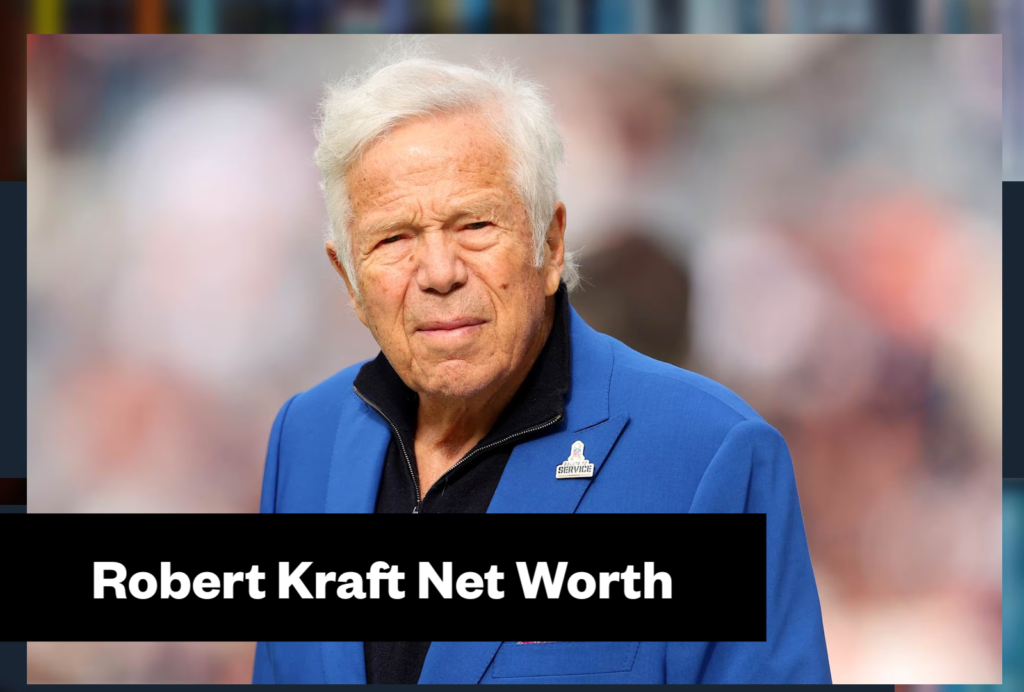
Robert Kraft’s net worth, New England Patriots ownership, Kraft Group businesses, sports investments, assets, philanthropy and financial success explained.
Key Highlights
- Robert Kraft is an American billionaire businessman and owner of the New England Patriots.
- Forbes estimated his net worth at about $13.8 billion in 2026.
- He bought the New England Patriots for $172 million in 1994.
- Forbes valued the Patriots at $9 billion in August 2025.
- His wealth comes from sports ownership, paper and packaging, real estate, private equity and other Kraft Group businesses.
- Under Kraft’s ownership, the Patriots became one of the most successful and valuable teams in NFL history.
- His business story is a strong example of long-term asset growth, franchise ownership and private company wealth.
Introduction
Robert Kraft is one of the most successful sports owners in the United States. He is best known as the owner of the New England Patriots, the NFL team he purchased in 1994 for $172 million. Decades later, that same franchise has become one of the most valuable teams in American sports, with Forbes valuing the Patriots at $9 billion in 2025.
Kraft’s financial story is not just about football. Before he became widely known as an NFL owner, he had already built wealth in paper and packaging. He later expanded his business interests through the Kraft Group, a diversified holding company with interests in sports, entertainment, real estate, paper, packaging and venture investing.
His net worth attracts attention because it shows how strategic ownership can create long-term financial growth. The Patriots became more valuable through strong branding, championship success, media rights, stadium economics and the rising value of NFL franchises.
Unlike weak net worth topics where there is little real financial data, Robert Kraft’s profile has strong public signals. Forbes estimated his net worth at about $13.8 billion in 2026, while the Patriots’ valuation and revenue provide useful context for understanding his wealth.
Quick Profile Table
| Detail | Information |
|---|---|
| Full Name | Robert Kenneth Kraft |
| Profession | Businessman, investor, sports team owner and philanthropist |
| Nationality | American |
| Date of Birth | 5 June 1941 |
| Birthplace | Brookline, Massachusetts, United States |
| Known For | Owner of the New England Patriots |
| Estimated Net Worth | About $13.8 billion, according to Forbes in 2026 |
| Main Business | The Kraft Group |
| Main Wealth Sources | Sports ownership, paper and packaging, real estate, private equity and investments |
| Patriots Purchase Price | $172 million in 1994 |
| Patriots Valuation | $9 billion, according to Forbes’ August 2025 valuation |
| Other Sports Asset | New England Revolution |
| Major Achievement | Six Super Bowl titles as Patriots owner |
Robert Kraft Net Worth in 2026
Robert Kraft’s net worth was estimated by Forbes at about $13.8 billion in 2026. That places him among the richest sports team owners in the world. His wealth is strongly connected to the New England Patriots, but it also includes his wider business interests through the Kraft Group.
The most important part of his wealth story is the growth of the Patriots. Kraft bought the team in 1994 for $172 million. By August 2025, Forbes valued the franchise at $9 billion. This means the team’s estimated value increased many times over under his ownership.
This does not mean Kraft’s personal cash is the same as the Patriots’ full valuation. A sports franchise is an asset, and its value depends on what buyers may be willing to pay, revenue, stadium agreements, media rights, debt, profitability and market position. Still, because Kraft owns the team through his family business interests, the Patriots are a central part of his billionaire status.
His net worth also reflects earlier business success in paper and packaging. Forbes notes that Kraft made an early fortune in that industry before becoming best known for sports ownership.
How Robert Kraft Made His Money
Robert Kraft made his money through a combination of private business ownership, industrial operations, sports investments and long-term asset growth. His career shows how wealth can grow when a businessman buys strong assets and holds them for decades.
Paper and Packaging Business
Before the Patriots became the centre of his public image, Kraft was already successful in paper and packaging. He built his early fortune through businesses connected to packaging, manufacturing and distribution. This gave him the capital and business foundation to expand into sports and other assets.
Paper and packaging may not sound as glamorous as sports ownership, but it can be a strong business sector. Companies need packaging for consumer goods, shipping, manufacturing and retail distribution. Kraft’s early success in this area helped create the financial base for his later investments.
The Kraft Group
Robert Kraft is the founder, chairman and CEO of the Kraft Group. The company operates as a diversified holding company with interests in paper and packaging, sports and entertainment, real estate and venture investing.
This structure is important because it means Kraft’s wealth is not dependent on only one business. The Kraft Group gives him exposure to several industries, including industrial operations and high-value sports assets.
New England Patriots Ownership
Kraft’s most famous investment is the New England Patriots. He bought the team in 1994 for $172 million. At the time, the Patriots were not the global sports brand they later became. Under Kraft’s ownership, the team won six Super Bowl championships and became one of the NFL’s most valuable franchises.
Sports ownership can create wealth in several ways. Franchise values can rise, team revenue can grow, stadium income can increase, and media rights can become more valuable. NFL teams have also benefited from the league’s strong national television deals and massive fan interest.
New England Revolution
Kraft’s sports portfolio also includes the New England Revolution, a Major League Soccer club. While the Patriots are far more valuable, the Revolution adds another sports asset to his business empire. Forbes also lists the New England Revolution among Kraft’s teams.
Real Estate and Venture Investing
The Kraft Group also has interests in real estate and venture investing. These areas can contribute to wealth through property development, asset appreciation, business stakes and long-term investment returns.
For a billionaire like Kraft, wealth is usually not held in one place. It is often spread across operating businesses, sports teams, real estate, private equity, cash, investments and family-controlled entities.
The New England Patriots and Kraft’s Wealth
The Patriots are the centrepiece of Robert Kraft’s financial profile. When he bought the team in 1994, the NFL was already popular, but franchise values were much lower than they are today. The $172 million purchase price now looks like one of the most successful sports investments of the modern era.
Forbes valued the Patriots at $9 billion in August 2025. The same Forbes team valuation listed the franchise’s revenue at $762 million and operating income at $222 million. These figures help explain why the team is such an important part of Kraft’s net worth.
The team’s value grew for several reasons:
- six Super Bowl championships under Kraft’s ownership
- the long success of the Tom Brady and Bill Belichick era
- strong national and international NFL popularity
- valuable media rights
- strong fan loyalty in New England
- stadium and commercial revenue
- the scarcity value of NFL franchises
Sports franchises are rare assets. There are only 32 NFL teams, and wealthy buyers often compete for ownership opportunities. This scarcity can push valuations higher, especially for successful teams in strong markets.
Patriots Purchase Price vs Current Valuation
The difference between Kraft’s purchase price and the Patriots’ current valuation is one of the strongest parts of his wealth story.
| Metric | Amount |
|---|---|
| Patriots Purchase Price in 1994 | $172 million |
| Forbes Patriots Valuation in 2025 | $9 billion |
| Forbes 2025 Revenue Estimate | $762 million |
| Forbes 2025 Operating Income Estimate | $222 million |
| Super Bowl Titles Under Kraft | 6 |
This comparison shows the power of long-term ownership. Kraft did not simply buy a sports team for short-term status. He bought an asset that became much more valuable over time.
The Patriots’ increase in value also reflects the wider growth of the NFL. The league has become one of the most powerful sports businesses in the world, with huge broadcast deals, sponsorships, merchandise sales and global fan engagement.
For readers studying business wealth, this is an important lesson: owning a rare, high-demand asset for decades can create enormous financial growth.
Kraft Group Business Empire
The Kraft Group is central to Robert Kraft’s wealth because it brings together his major business interests. The company’s portfolio includes paper and packaging, sports and entertainment, real estate and venture investing.
This kind of diversified structure helps reduce dependence on one income source. While the Patriots are the most famous asset, Kraft’s wealth also has roots in industrial business and investment management.
The paper and packaging side gave Kraft his early business foundation. The sports side brought massive public visibility and long-term asset appreciation. Real estate and venture investing add further opportunities for growth.
This mix makes Kraft different from celebrities whose wealth depends mainly on salaries, endorsements or entertainment income. His wealth is built around ownership.
Ownership is powerful because it can increase in value even when the owner is not receiving a regular salary from the asset. If the business or team becomes more valuable, the owner’s net worth can rise.
Robert Kraft’s Career Journey
Robert Kraft was born in Brookline, Massachusetts, in 1941. He later studied at Columbia University and Harvard Business School. His early business career was connected to paper and packaging, where he built the foundation of his fortune.
He entered the sports world gradually. His connection to the Patriots became serious before he bought the team outright. He first acquired assets connected to the team’s stadium and eventually purchased the franchise in 1994.
That purchase changed both his public identity and the history of the New England Patriots. Under his ownership, the team became one of the most successful franchises in NFL history.
The Patriots’ golden era was built around head coach Bill Belichick and quarterback Tom Brady. During that period, the team won six Super Bowl titles and became one of the most recognisable sports brands in the world.
Kraft’s business reputation grew alongside the team’s success. He became known not only as an industrialist, but also as a sports owner, philanthropist and influential figure in American football.
Assets, Investments and Sports Holdings
Robert Kraft’s biggest publicly known assets are connected to the Kraft Group and his sports holdings. His major assets include the New England Patriots, the New England Revolution and business interests under the Kraft Group.
Forbes has also noted that his sports portfolio has included a professional video gaming team in Boston connected to the Overwatch esports league.
His asset base can be understood in four main areas:
| Asset Category | How It Supports His Wealth |
|---|---|
| NFL Ownership | Patriots franchise value, revenue and long-term appreciation |
| MLS Ownership | New England Revolution and sports portfolio diversification |
| Industrial Businesses | Paper and packaging income |
| Real Estate and Investments | Long-term asset growth and private investment returns |
This gives Kraft a broad financial profile. He is not just an NFL owner. He is a private business owner whose wealth is tied to multiple asset classes.
Philanthropy and Public Impact
Robert Kraft is also known for philanthropy. The Kraft Group’s philanthropy page says Robert Kraft and his family have made lifetime commitments of almost $1 billion to nonprofits and causes. These efforts include health care, education, community support, social mobility and other charitable areas.
One notable example is the Kraft Family Blood Lab at the Dana-Farber Cancer Institute, which is described by the Kraft Group as a major blood platelet collection and research facility.
Philanthropy is important in Kraft’s public image because it shows that his financial legacy goes beyond sports and business. Large-scale giving can also shape how billionaire business figures are remembered by communities.
However, philanthropy should not be confused with net worth. Donations reduce private wealth in some cases, but they can also strengthen public reputation and social impact.
Lifestyle and Public Image
Robert Kraft’s lifestyle is connected to billionaire business ownership, elite sports and philanthropy. He is often seen at Patriots games, NFL events, business gatherings and charitable initiatives.
His public image is strongly tied to the Patriots. For many fans, he is the owner who helped turn the franchise into a modern NFL powerhouse. The team’s six Super Bowl championships under his ownership made him one of the most recognisable owners in American sports.
At the same time, Kraft’s wealth profile is more business-focused than celebrity-focused. His financial status comes from owning valuable assets, not from acting, music, social media or entertainment appearances.
This makes his profile especially useful for a business and net worth site because readers can learn about franchise ownership, asset appreciation and the economics of sports wealth.
Net Worth vs Patriots Valuation
Robert Kraft’s estimated net worth and the Patriots’ valuation are connected, but they are not the same thing.
Forbes estimated Kraft’s net worth at about $13.8 billion in 2026. Forbes valued the New England Patriots at $9 billion in August 2025.
The team valuation is the estimated market value of the franchise. His net worth includes the value of his ownership interests, other Kraft Group businesses, investments and assets, minus liabilities.
This distinction matters because a person can own a valuable team but still have additional wealth from other businesses. Kraft’s early paper and packaging fortune, real estate interests and investments also contribute to his financial profile.
It also matters because sports franchise value is not the same as cash. Kraft would only convert the full team value into liquid money if he sold a major stake or the entire franchise. Until then, much of his wealth is tied up in ownership.
Robert Kraft Compared With Other NFL Owners
Robert Kraft is among the richest and most influential NFL owners. His wealth is impressive, but what makes him stand out is the combination of financial growth and sporting success.
Some NFL owners inherited wealth or bought teams through family fortunes. Kraft built his early fortune in business, then used that success to enter sports ownership. His purchase of the Patriots became one of the best-known examples of a sports franchise increasing massively in value.
Compared with owners like Jerry Jones of the Dallas Cowboys, Kraft’s public identity is deeply tied to championships. The Cowboys may be the NFL’s most valuable franchise, but the Patriots’ dynasty under Kraft produced one of the strongest winning periods in league history.
This combination of business growth and championship success makes Kraft a major figure in sports finance.
Factors That May Affect Robert Kraft’s Net Worth
Several factors can affect Robert Kraft’s net worth over time.
NFL Franchise Valuations
If NFL team values continue rising, Kraft’s wealth may increase because the Patriots are one of his largest assets.
Patriots Revenue
Team revenue, sponsorships, ticket sales, stadium income and media-related distributions can affect the franchise’s financial performance.
Private Business Performance
The Kraft Group’s paper, packaging, real estate and investment businesses can also influence his wealth.
Sports Market Demand
The scarcity of NFL franchises supports high valuations. If wealthy buyers continue competing for team ownership, franchise values may remain strong.
Estate Planning and Family Ownership
Like many billionaires, Kraft’s wealth may be affected by family trusts, succession planning, taxes and ownership arrangements.
Minority Stake Sales
In 2025, Reuters reported that the Patriots were selling an 8% stake at a valuation of about $9 billion, while the Kraft family would retain more than 90% ownership. Such transactions can confirm market value and create liquidity without giving up control.
Financial Lessons From Robert Kraft’s Career
Robert Kraft’s career offers several useful financial lessons.
First, ownership creates wealth. Kraft’s biggest financial gains came from owning valuable businesses and sports assets, not from salary alone.
Second, long-term patience can be powerful. Buying the Patriots in 1994 and holding the team for decades allowed him to benefit from massive franchise appreciation.
Third, brand value matters. The Patriots became more valuable because the team built a powerful identity around winning, loyalty and national attention.
Fourth, diversification protects wealth. Kraft’s business interests go beyond one team or one industry, which gives his financial empire more stability.
Finally, rare assets can become extremely valuable. NFL teams are scarce, and that scarcity helps explain why franchises are now worth billions.
Conclusion
Robert Kraft’s net worth is estimated by Forbes at about $13.8 billion, making him one of the richest sports owners in the world. His wealth comes from decades of business ownership, especially through the Kraft Group, paper and packaging, real estate, investments and sports assets.
His most important financial asset is the New England Patriots. Kraft bought the team for $172 million in 1994, and Forbes valued it at $9 billion in 2025. That growth shows the financial power of long-term ownership, strong branding and the rising value of NFL franchises.
Robert Kraft’s story is not just about being wealthy. It is about building, buying and holding valuable assets. His career gives readers a clear example of how business ownership, sports franchises and disciplined long-term investment can create billionaire-level wealth.
FAQs
What is Robert Kraft’s net worth?
Forbes estimated Robert Kraft’s net worth at about $13.8 billion in 2026.
How did Robert Kraft make his money?
Robert Kraft made his money through paper and packaging, the Kraft Group, sports ownership, real estate, private equity and investments.
How much did Robert Kraft pay for the New England Patriots?
Robert Kraft bought the New England Patriots for $172 million in 1994.
How much are the New England Patriots worth?
Forbes valued the New England Patriots at $9 billion in August 2025.
What businesses does Robert Kraft own?
Robert Kraft is the founder, chairman and CEO of the Kraft Group, which has interests in paper and packaging, sports and entertainment, real estate and venture investing.